Spinal decompression therapy at Scott Chiropractic in Knoxville uses controlled mechanical traction to apply a gentle pulling force to the spine. Depending on your condition, treatment may involve the lower back or neck. Before recommending it, Dr. Jon Scott reviews your health history, evaluates your symptoms, and determines whether traction is appropriate for your individual situation.
What Is Non-Surgical Spinal Decompression Therapy?
Spinal decompression therapy is a term commonly used to describe certain forms of mechanical spinal traction. The treatment uses controlled pulling forces to create a distraction force along the spine. Depending on the treatment approach, traction can be applied to either the lumbar spine (lower back) or cervical spine (neck).
The goal is to change the mechanical loading around certain spinal structures. For appropriately selected patients, traction may be considered as one part of a broader approach to managing spinal symptoms.
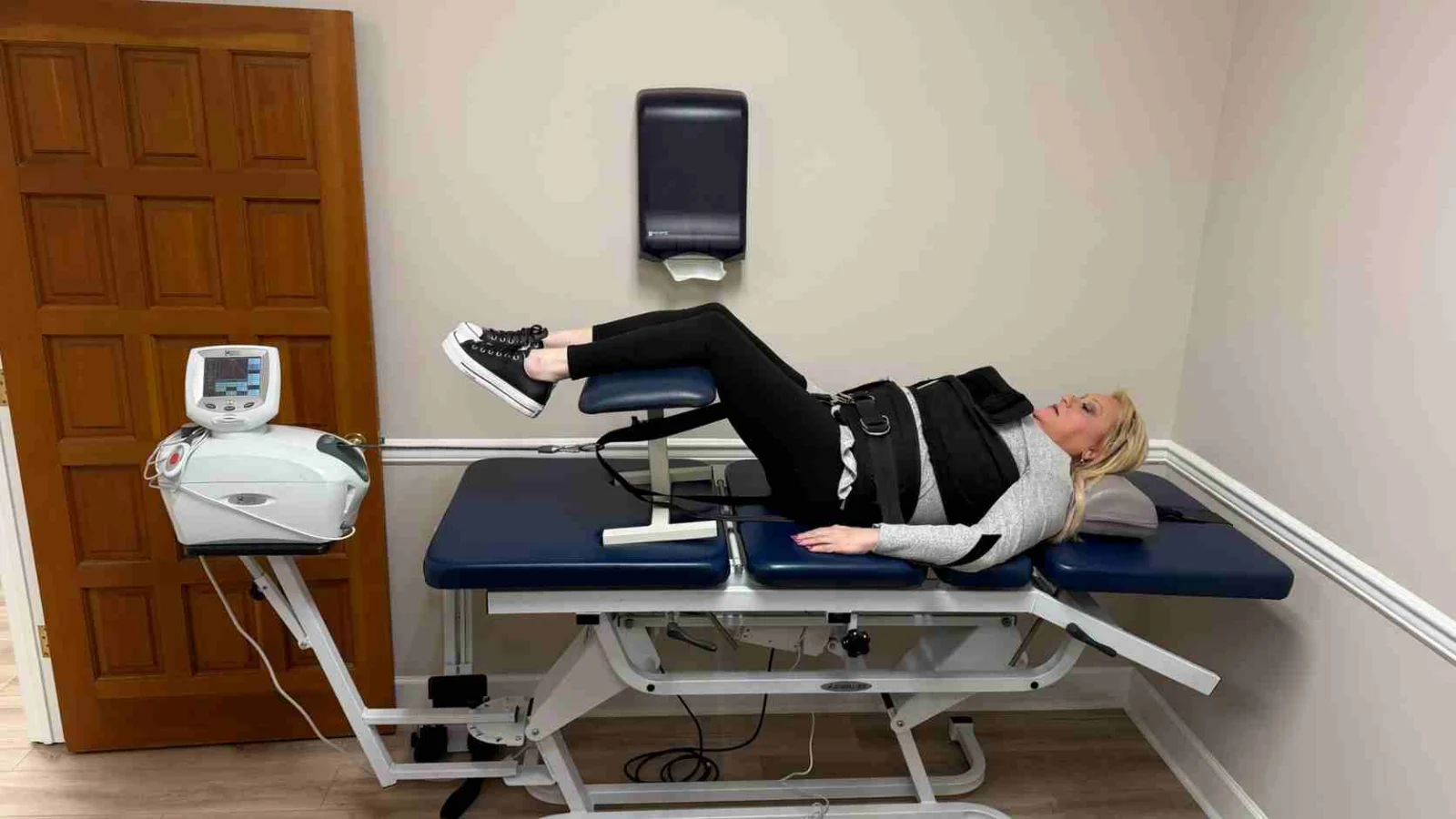
At Scott Chiropractic, we use a Chattanooga mechanical traction system for cervical and lumbar treatment. The treatment is non-surgical and does not involve an operation or surgical alteration of the spine.
It is important to understand that spinal decompression does not guarantee that a herniated disc will return to its original position, regenerate a damaged disc, or eliminate nerve pain. The appropriateness and effectiveness of treatment depend on the underlying condition and the individual patient’s response.
What Conditions May Be Considered for Spinal Decompression?
People often begin researching spinal decompression because they are dealing with persistent back pain, neck pain, sciatica, or symptoms that travel into an arm or leg.
Depending on the examination findings, health history, and individual circumstances, mechanical traction may be considered for certain patients with conditions such as:
- Herniated or bulging lumbar discs
- Degenerative disc disease
- Sciatica and certain types of radiating leg pain
- Certain forms of lumbar spinal stenosis
- Chronic lower back pain associated with appropriate mechanical conditions
- Cervical disc problems and selected nerve-related neck conditions
Having one of these conditions does not automatically mean you are a candidate for decompression. For example, pain traveling down your leg can have several possible causes. It may involve a lumbar nerve root, a disc, the hip, or another structure. The same symptoms do not necessarily call for the same treatment.
This is why we believe an appropriate examination must come before a treatment recommendation.
What Happens During a Spinal Decompression Appointment at Scott Chiropractic?
At Scott Chiropractic, patients are generally positioned face-up on the treatment table. Appropriate straps and supports are used to secure the patient for either cervical or lumbar traction, depending on the area being treated.
Once the patient is positioned, the Chattanooga traction system applies controlled pulling forces according to the selected treatment approach. The protocol is chosen based on the patient’s condition, symptoms, clinical objectives, and tolerance.
The treatment is intended to be gentle and controlled. Dr. Scott monitors how the patient responds and whether the treatment remains appropriate. If symptoms increase or the patient does not tolerate the procedure, the approach must be reassessed.
Spinal decompression is not a one-size-fits-all procedure. The treatment approach for someone experiencing lower-back and leg symptoms may be different from the approach for someone experiencing neck pain with symptoms extending into an arm.
What Is the Difference Between Lumbar and Cervical Spinal Decompression?
Although both treatments use mechanical traction, lumbar and cervical decompression address different regions of the spine.
Lumbar spinal decompression applies controlled traction to the lower back. It may be considered for selected patients experiencing symptoms associated with certain disc problems, nerve-root irritation, and other mechanical conditions affecting the lumbar spine.
People researching lumbar decompression often describe lower-back pain, sciatica, shooting pain into the leg, numbness, or tingling. These symptoms require evaluation because they can have different underlying causes.
Cervical spinal decompression applies controlled traction to the neck. It may be considered for certain patients with cervical disc problems or nerve-root irritation that contributes to symptoms extending into the shoulders, arms, or hands.
Not all neck pain or arm symptoms originate in the cervical spine. A thorough examination helps determine whether cervical traction is a reasonable option or whether another approach is more appropriate.
How Do You Determine Whether You Are a Candidate for Spinal Decompression?
This is one of the most important parts of our approach at Scott Chiropractic.
When a patient comes into my office with lower-back pain and symptoms extending into the leg, I want to understand the specific type and pattern of symptoms they are experiencing. I use the consultation and appropriate examination procedures to help determine whether the problem involves sciatica, nerve-root irritation, a disc problem, or another condition.
I also review the patient’s health history and look for circumstances that could make mechanical traction inappropriate or require additional precautions. Depending on the presentation, the examination may include orthopedic testing, neurological evaluation, range-of-motion assessment, and postural analysis.
Previous spinal surgery, fractures, osteoporosis, pregnancy, significant vascular conditions, and known spinal instability are examples of information patients should disclose before treatment is considered. Certain conditions may require additional medical evaluation or consultation.
After reviewing the findings, I can explain whether cervical or lumbar traction may be appropriate, whether another treatment approach should be considered, or whether referral for further medical evaluation is necessary.
We don’t believe in placing everyone on the same machine and hoping for the best. We test, we don’t guess.
At Scott Chiropractic, the decision to consider traction is based on the patient’s presentation, examination findings, health history, and response to treatment. If it is not appropriate, another approach or medical referral may be necessary.
Why Choose Scott Chiropractic for Spinal Decompression in Knoxville?
At Scott Chiropractic, we believe the most important part of treatment happens before someone gets on the traction table. We want to understand what is contributing to your symptoms and whether spinal decompression is an appropriate option.
Dr. Jon Scott has more than 29 years of chiropractic experience and uses a comprehensive evaluation process before recommending care. Our Chattanooga mechanical traction system provides both cervical and lumbar traction, allowing us to consider treatment for selected conditions involving the neck and lower back.
We also monitor your response from visit to visit. If the treatment is not helping or your symptoms change, we reassess the approach rather than continuing with a predetermined number of sessions.
If you are researching spinal decompression therapy in Knoxville, we invite you to learn more about our treatment approach and evaluation process.
If you are experiencing persistent lower-back pain, neck pain, sciatica, or symptoms traveling into your arms or legs, call Scott Chiropractic at (865) 693-1911 to schedule a consultation and examination. We will take the time to evaluate your condition and determine whether spinal decompression may be appropriate.
We test, we don’t guess.