$45 New Patient Special — consultation, exam & X-rays (if needed). Call (865) 693-1911 8805 Kingston Pike, Suite 105, Knoxville, TN 37923
Condition

Sciatica

Sciatica is nerve pain that travels from your lower back down through the buttock and leg, and chiropractic can help. At Scott Chiropractic in Knoxville, Dr. Jon Scott identifies what is irritating the sciatic nerve, often a disc or joint in the low back, and builds a corrective plan designed to take pressure off the nerve and relieve the pain.

Sciatica

What is Sciatica?

Sciatica is not a condition in itself but a description of a symptom: pain that radiates along the path of the sciatic nerve, the largest nerve in your body. It begins in the lower back, where nerve roots exit the spine, then runs through the buttock and down the back of the leg, sometimes all the way to the foot. Most often sciatica affects just one side.

The pain can range from a mild ache to a sharp, burning, or electric jolt that shoots down the leg. Many people also feel tingling, numbness, or weakness in the leg or foot, and the pain frequently worsens with sitting, coughing, sneezing, or certain movements. What makes sciatica so distinct from ordinary back pain is that radiating, traveling quality, the sign that a nerve, not just a muscle, is involved.

Sciatica happens when something compresses or irritates the sciatic nerve or the roots that feed it. The most common culprit is a bulging or herniated disc in the lower spine pressing on a nerve root, but it can also come from joint misalignment, narrowing of the spaces the nerves pass through, or tight muscles in the buttock irritating the nerve as it passes by. Because the source is usually mechanical, sciatica often responds well to conservative, corrective care that relieves the pressure on the nerve rather than simply masking the pain.


Common symptoms

  • Pain radiating from the lower back through the buttock and down one leg
  • Sharp, burning, or electric-like pain rather than a dull ache
  • Tingling or pins-and-needles sensations in the leg or foot
  • Numbness along the path of the nerve
  • Weakness in the affected leg or foot
  • Pain that worsens with sitting, coughing, or sneezing
  • Discomfort usually felt on just one side of the body

Common causes

  • Herniated or bulging disc — A disc in the lower spine pushes outward and presses on a nearby nerve root, the most common source of sciatica.
  • Nerve-root compression — Narrowing of the spaces where nerves exit the spine can pinch the roots that form the sciatic nerve.
  • Joint misalignment or restriction — Vertebrae or pelvic joints that lose normal position and motion can irritate the nerve and inflame surrounding tissue.
  • Spinal degeneration — Age-related wear and arthritis can narrow nerve passages and contribute to irritation of the sciatic nerve.
  • Piriformis and muscle tension — Tight muscles deep in the buttock can compress the sciatic nerve as it passes nearby, mimicking or adding to disc-related pain.
  • Prolonged sitting and poor posture — Long hours seated and poor spinal alignment increase pressure on the lower back discs and the nerves they can affect.

When to seek chiropractic care

Most sciatica is mechanical and responds well to conservative chiropractic care, but some signs call for prompt medical evaluation first. Seek immediate attention if your leg pain follows major trauma, or if you experience loss of bowel or bladder control, numbness around the groin or inner thighs, progressive or significant weakness in the leg or foot (such as the foot dragging or giving way), or fever alongside the pain. These can signal serious nerve compression that needs urgent care rather than routine treatment.

For typical sciatica, the radiating leg pain that comes from a disc or joint problem, there is no reason to simply endure it. Sciatica that lasts more than a week or two, keeps returning, or interferes with sitting, sleeping, or walking deserves a proper evaluation. At Scott Chiropractic, Dr. Scott examines you thoroughly and takes X-rays when they are clinically useful to understand where the nerve is being irritated before any care begins. Chiropractic is conservative, non-invasive care, and it is often the right place to start before considering more aggressive options.

Our approach

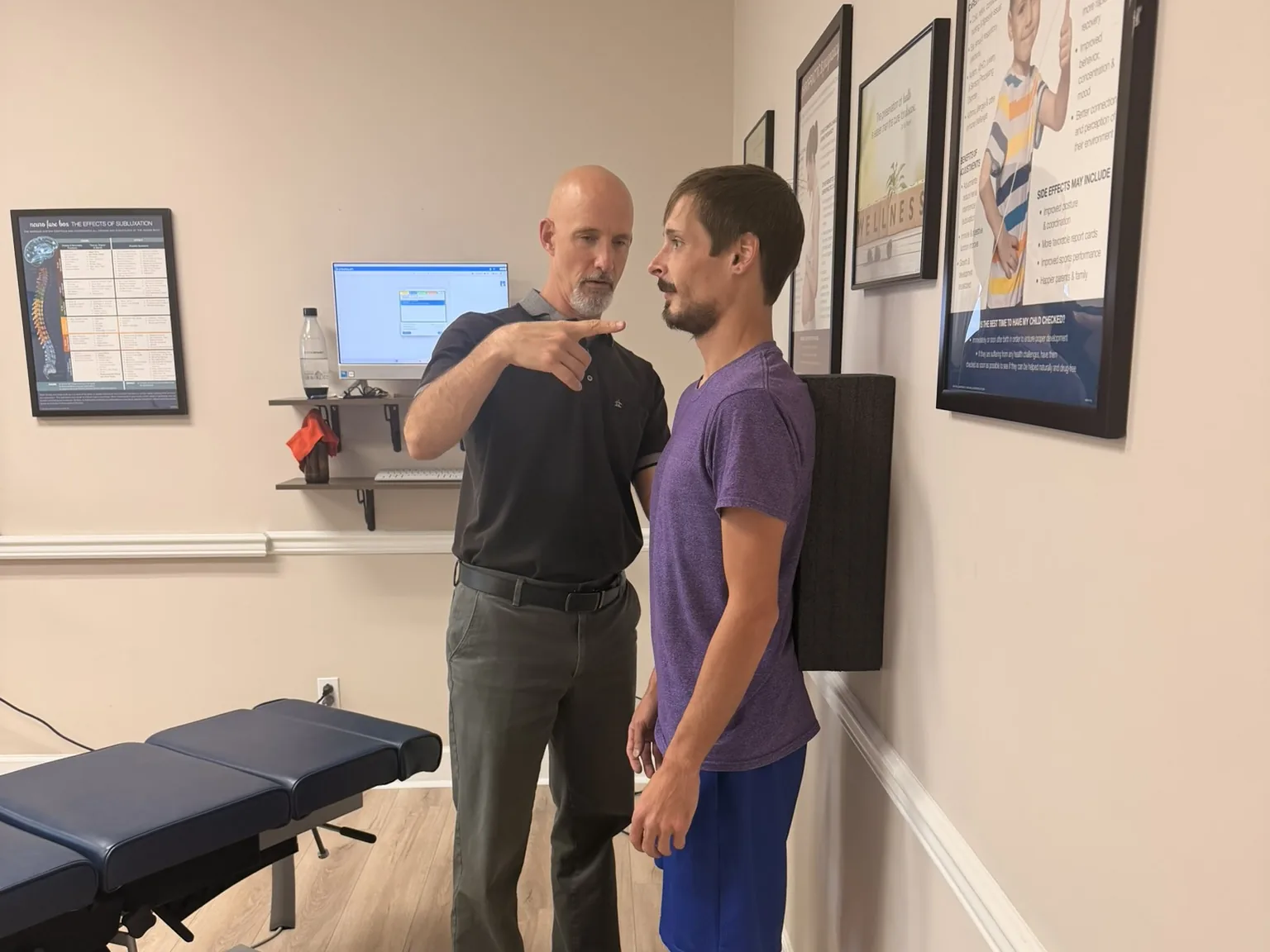
Because sciatica is a nerve problem with a mechanical cause, finding that cause is everything. Dr. Scott starts every new patient with a consultation, a comprehensive exam, and X-rays when they are clinically useful, so he can determine where the sciatic nerve is being compressed or irritated, whether it traces to a disc, a nerve root, joint misalignment, or muscle tension. He does not guess at sciatica; he locates the source and explains exactly what he finds and what correcting it will involve.

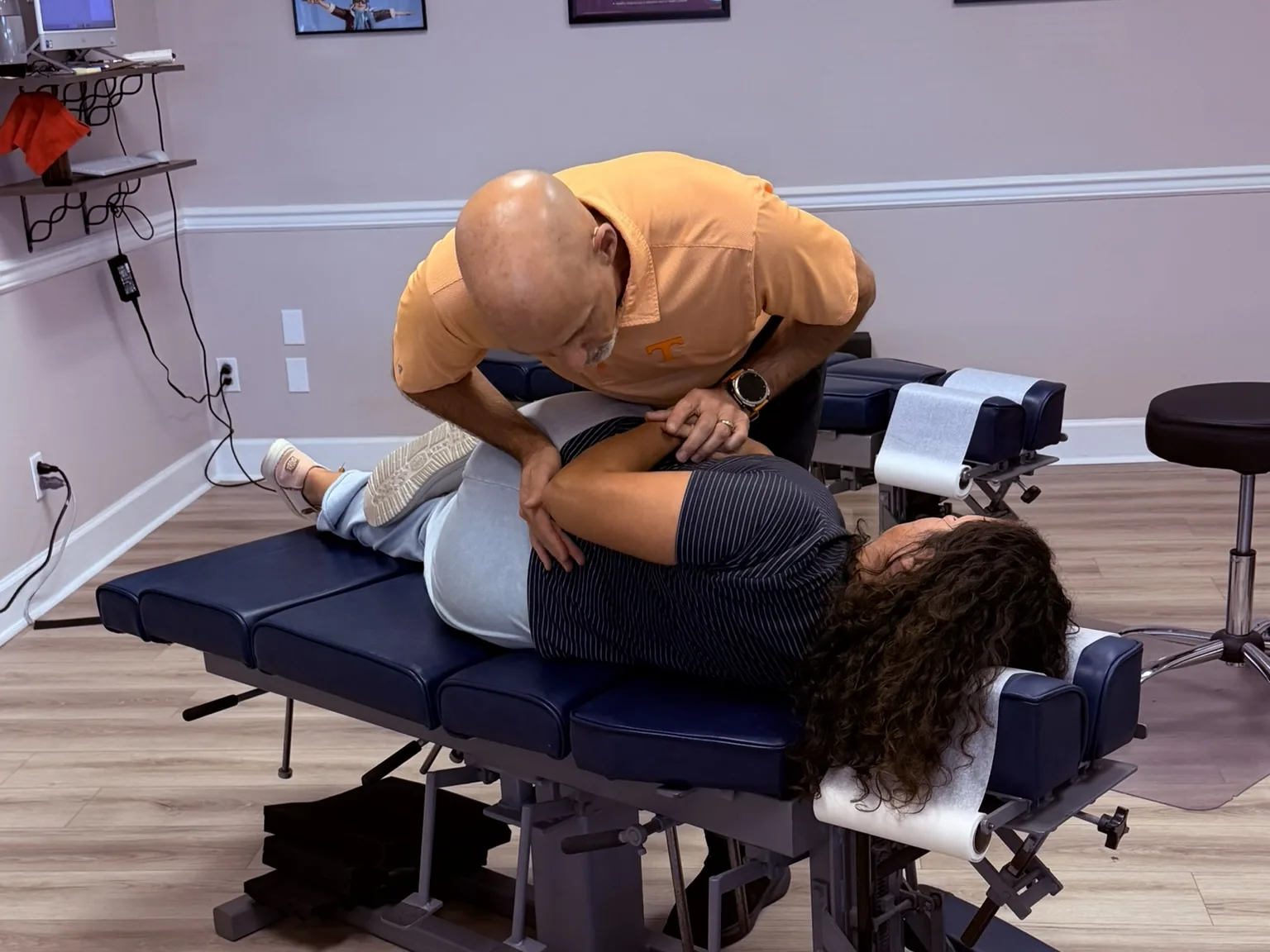
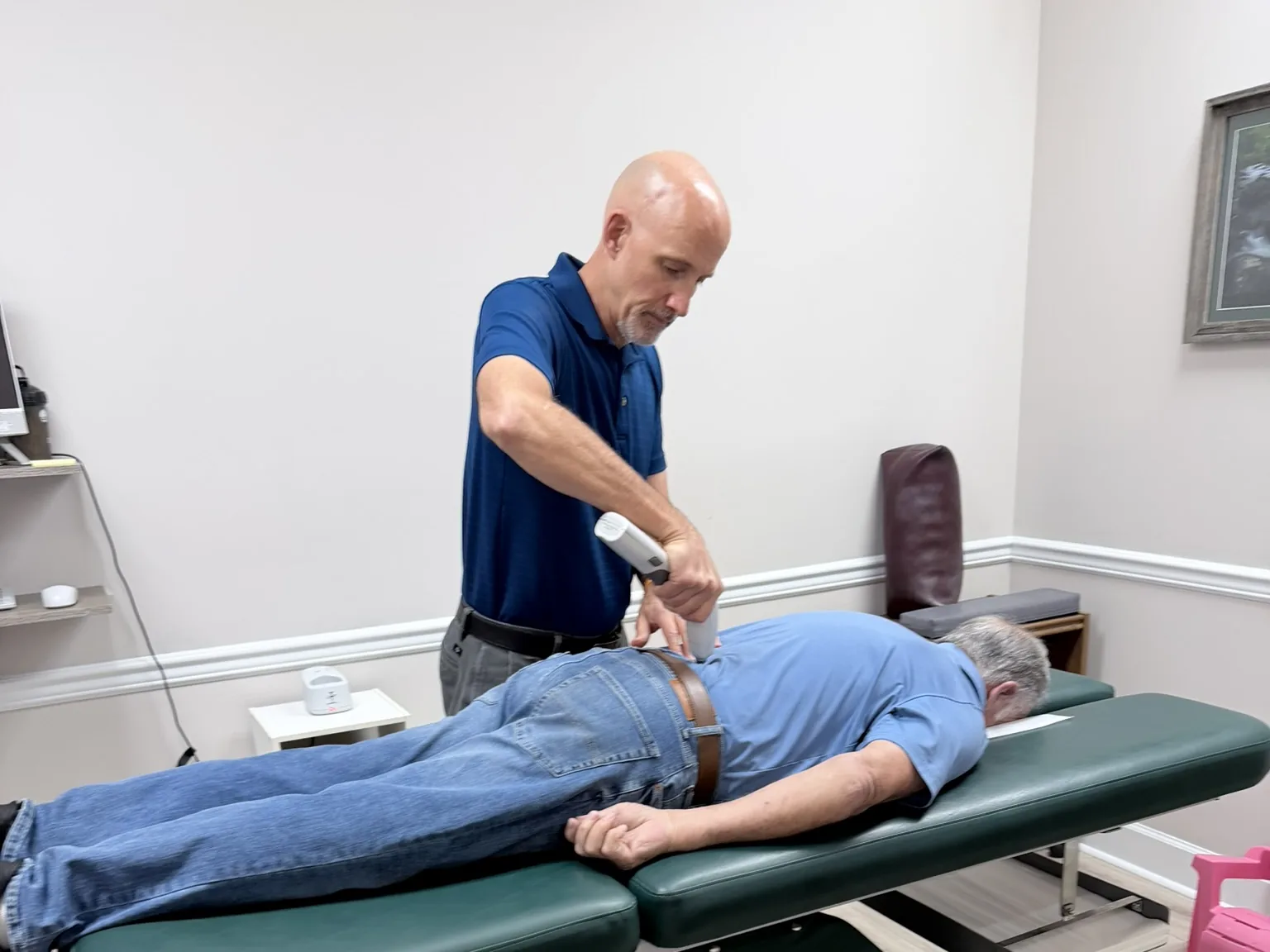
Care is tailored to your body and your pain level, which matters when a nerve is already inflamed. With the Activator Method, Dr. Scott can deliver precise, gentle, low-force adjustments with a handheld instrument, a real advantage when a forceful approach feels intimidating. He is also trained in Diversified, Gonstead, Palmer, and Drop Table techniques for patients who do well with traditional hands-on adjusting.

The aim is to take pressure off the nerve and restore proper alignment and motion to the lower spine and pelvis, so the irritation calms and stays calm. For sciatica linked to poor posture and lost spinal alignment, Dr. Scott uses Chiropractic BioPhysics (CBP) X-ray analysis and postural correction exercises. He often pairs adjustments with targeted corrective exercises to support the low back. The result is a clear, goal-oriented plan with a finish line, focused on correcting the cause rather than chasing the pain down your leg.

Typical care timeline

Relief

Duration: 2 to 6 weeks
Frequency: Often 2 to 3 visits per week

Reduce nerve irritation and inflammation and ease the radiating leg pain so you can sit, sleep, and move more comfortably.

Correction

Duration: 1 to several months
Frequency: Tapering as you improve

Address the underlying disc, joint, or alignment problem compressing the nerve, supported by corrective exercises, so the sciatica does not return.

Wellness

Duration: Ongoing as you choose
Frequency: Periodic check-ins

Maintain healthy low-back alignment and movement and catch early signs before the nerve becomes irritated again.

Frequently asked questions

Can a chiropractor help sciatica without surgery or medication?

For most mechanical sciatica, yes. Because the pain usually comes from a disc or joint pressing on the nerve, restoring proper alignment and motion can relieve that pressure naturally. Dr. Scott’s corrective approach is designed to address the cause, offering a conservative, drug-free option before more aggressive measures are considered.

Is chiropractic care safe when a nerve is already inflamed?

When matched to your case, chiropractic is a safe, non-invasive option for sciatica. Dr. Scott examines you and reviews X-rays when useful before adjusting, and the gentle, instrument-based Activator Method lets him work precisely without forceful twisting, which many patients prefer when a nerve is irritated.

How long does it take for sciatica to improve with chiropractic?

Many patients notice the radiating pain easing within the first few weeks, though it depends on the cause and how long the nerve has been irritated. Correcting the underlying problem takes longer than initial relief, which is why Dr. Scott maps out a realistic timeline after your exam.

What is actually causing my sciatica?

Sciatica has several possible sources, most commonly a bulging or herniated disc pressing on a nerve root, but also joint misalignment, narrowed nerve spaces, or tight buttock muscles. That is exactly why Dr. Scott examines you and uses X-rays when clinically useful, so your care targets the real source rather than a guess.

Will the sciatica come back after treatment?

The goal of Dr. Scott’s corrective approach is to address the cause so recurrence is less likely, not just to quiet the pain temporarily. Many patients keep their results with healthy posture, the home exercises he provides, and occasional wellness visits, though ongoing care is always your choice.

Written by Dr. Jon Scott, DC — a Knoxville, TN chiropractor with more than 29 years in practice. Learn about Dr. Scott.

Credentials: Doctor of Chiropractic, Cleveland Chiropractic College (1996). Last updated June 26, 2026.

Your solution to pain.

We test, we don't guess. Book your first visit today — new patient special $45.