
Lower back pain radiating down the leg can occur when a nerve or nerve root in the lower spine becomes irritated or compressed. A herniated disc, spinal narrowing, or another condition may contribute. Understanding the pattern of your pain, numbness, tingling, or weakness is important when determining what may be causing your symptoms.
What Does a Pinched Nerve in the Lower Back Feel Like?
A pinched or irritated nerve in the lower back can cause symptoms that extend beyond the back itself. Some people describe sharp, shooting, burning, or electric-like pain that travels into the buttock, thigh, calf, or foot. Others experience numbness, tingling, pins-and-needles sensations, or weakness in the leg.
These symptoms may occur on one side or, depending on the underlying condition, affect both legs. Certain activities, such as sitting, bending, coughing, or sneezing, may make the discomfort more noticeable.
One term commonly associated with these symptoms is sciatica. Sciatica describes pain that follows the path of the sciatic nerve, generally extending from the lower back or buttock down the leg. Lumbar radiculopathy is a related medical term describing irritation or dysfunction of a nerve root as it exits the lower spine.
Although people often use the terms pinched nerve, sciatica, and radiculopathy interchangeably, they do not mean exactly the same thing. Identifying the pattern of symptoms is an important part of determining what may be happening.
What Can Cause Lower Back Pain That Travels Down the Leg?
Several conditions can cause lower back pain with symptoms extending into the leg. One common possibility is a bulging or herniated disc. The discs between the vertebrae help cushion the spine. When a disc changes shape or develops a herniation, nearby nerve structures may become irritated.
Another possible cause is lumbar spinal stenosis. This condition involves narrowing of the spaces through which spinal nerves travel. Depending on the location and severity, it can contribute to back pain, leg discomfort, numbness, weakness, or difficulty walking.
Other possibilities include degenerative changes in the spine, irritation involving the small spinal joints, and conditions affecting the hip or surrounding muscles. Not every person with pain traveling down the leg has a herniated disc or a pinched nerve.
That is why it is important to look beyond the location of the pain. Two people can describe nearly identical symptoms but have different underlying problems that require different approaches.
How Do You Determine Whether It Is Sciatica, a Disc Problem, or a Pinched Nerve?
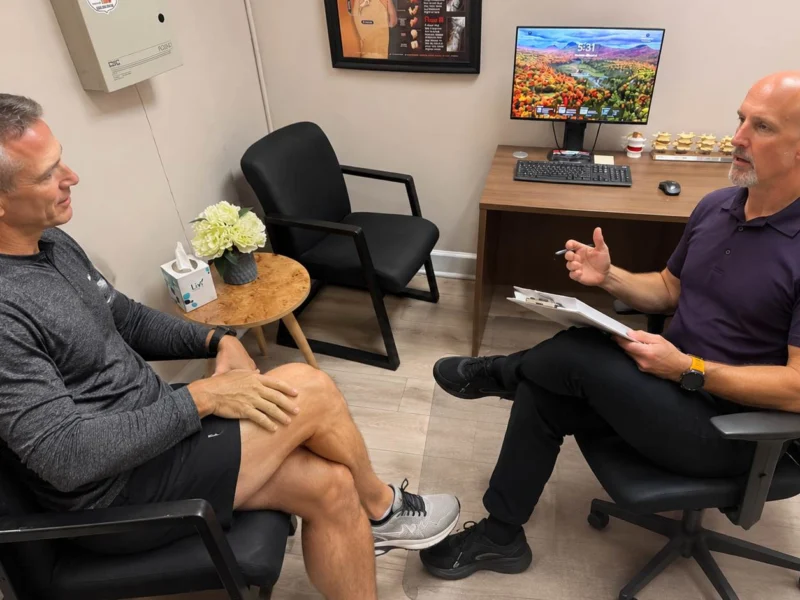
When patients come into my office with lower back pain and symptoms extending into the leg, one of my first priorities is identifying the specific type and pattern of symptoms they are experiencing. Through a thorough consultation and appropriate examination, I work to determine whether the problem is sciatica or another condition that may be producing similar symptoms.
I also evaluate whether spinal joint movement or alignment may be contributing to irritation, or whether a disc problem could be involved. The examination findings help determine what areas need further attention and whether additional medical evaluation or imaging may be appropriate.
In my experience, patients who seek an evaluation earlier rather than waiting for symptoms to persist or worsen give us an opportunity to identify the contributing problem sooner and determine appropriate next steps. The course of recovery varies from person to person, so an examination is important before making assumptions about treatment or prognosis.
Depending on the situation, an evaluation may include a review of your health history, neurological testing, orthopedic testing, spinal range-of-motion assessment, and a review of available imaging. X-rays can show bones and certain structural features, but they do not directly show the discs or spinal nerves. Additional imaging, such as an MRI, may be appropriate when the clinical findings indicate it could help guide the next steps.
Can Spinal Decompression Help With Sciatica or a Herniated Disc?
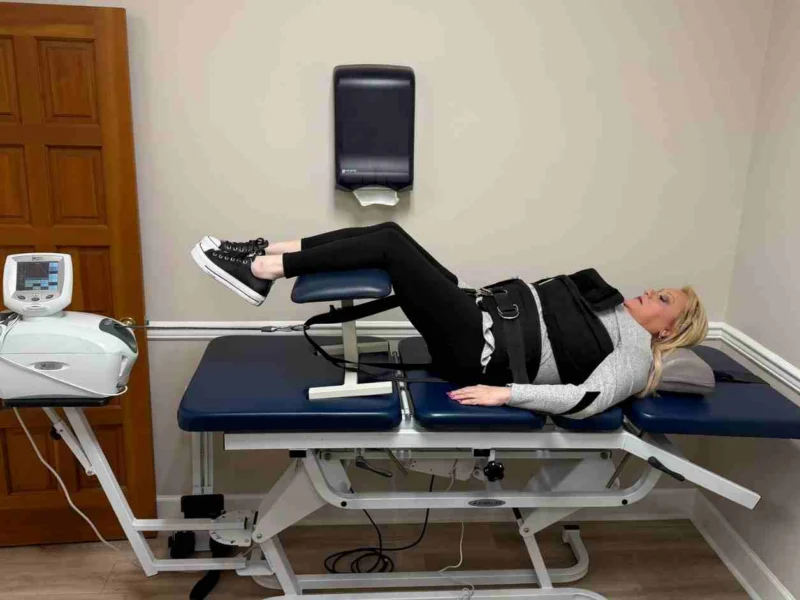
Spinal decompression is a term commonly used for mechanical traction treatments that apply a controlled pulling force to the spine. The goal is to temporarily change the loading forces around selected spinal structures. Some providers offer this approach as a non-surgical treatment option for people with certain types of back and leg symptoms.
However, it is important to understand that spinal decompression is not a guaranteed solution for sciatica, a herniated disc, or every type of pinched nerve.
Mechanical decompression should not be presented as a treatment that works for everyone or as a substitute for appropriate medical care. The decision to consider it should take into account the patient’s symptoms, examination findings, health history, and other available treatment options.
It is also important to distinguish non-surgical spinal decompression from spinal decompression surgery. They are different procedures. Surgical decompression may be considered by a medical specialist in selected cases of persistent sciatica when non-surgical treatment has not improved pain or function and imaging findings are consistent with the symptoms.
At Scott Chiropractic, the first step is determining what may be contributing to your symptoms. Dr. Scott evaluates each patient before deciding whether mechanical traction is an appropriate option to discuss. You can learn more about non-surgical spinal decompression at Scott Chiropractic in Knoxville, including the evaluation process and why patient selection matters.
When Should You Have Pain Traveling Down Your Leg Evaluated?
If lower-back pain repeatedly travels into your buttock or leg, or you are experiencing numbness, tingling, or weakness, it is worth having the symptoms evaluated. The sooner the underlying problem is understood, the sooner you can make informed decisions about appropriate care.
Some symptoms require more than a routine chiropractic appointment. Seek emergency medical attention if you develop new loss of bowel or bladder control, numbness around the groin or saddle area, or rapidly worsening or significant leg weakness. These can be warning signs of serious nerve compression, including cauda equina syndrome.
Prompt medical evaluation is also important when back pain follows a significant injury, occurs with fever, or is accompanied by other concerning symptoms. If you are uncertain about the seriousness of your symptoms, contact a medical professional for guidance.
What Should You Do if You Have Lower Back Pain and Leg Symptoms?
Do not assume that pain traveling down your leg is simply a muscle problem or that every case is caused by a herniated disc. The symptoms you describe, your health history, and the findings of an appropriate examination all matter.
At Scott Chiropractic in Knoxville, Dr. Jon Scott takes a careful approach to evaluating lower-back pain, sciatica, and radiating nerve symptoms. The goal is to understand what may be contributing to the problem and determine whether corrective chiropractic care, mechanical traction, another conservative option, or referral for medical evaluation is appropriate.
If you want to learn more about the symptoms commonly associated with sciatica, read our related article, Can a Chiropractor Help Sciatica, and How Long Does It Take?
If you are experiencing lower-back pain that travels into your leg, call Scott Chiropractic at (865) 693-1911 to schedule a consultation and examination. Find out what may be causing your symptoms and what options are appropriate for your situation.
We test, we don’t guess.