$45 New Patient Special — consultation, exam & X-rays (if needed). Call (865) 693-1911 8805 Kingston Pike, Suite 105, Knoxville, TN 37923
Condition

Posture Problems

If forward head posture, rounded shoulders, or "tech neck" leave you stiff and achy, posture correction in Knoxville can help. At Scott Chiropractic, Dr. Jon Scott measures your spine, identifies what's pulling you out of alignment, and uses structural correction to bring your body back toward its natural, balanced shape.
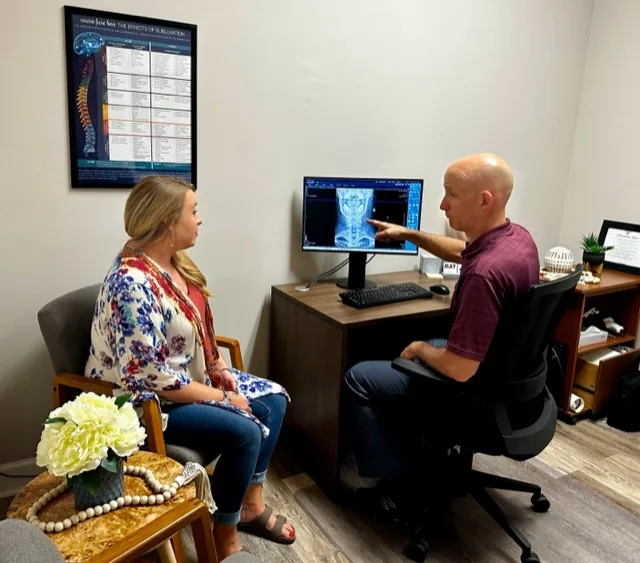
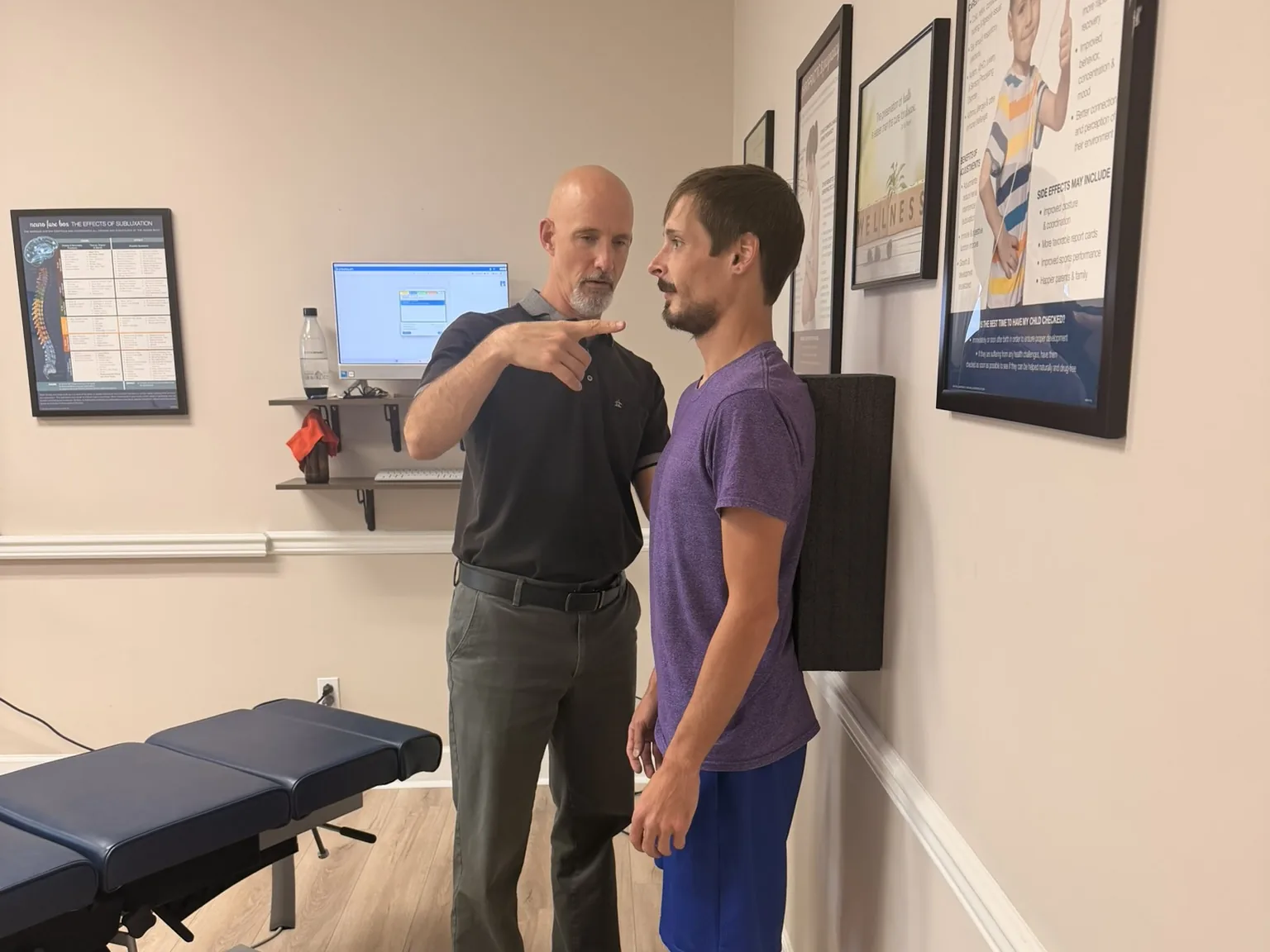
Dr. Jon Scott reviewing a cervical X-ray with a patient

What are Posture Problems?

Posture problems happen when your spine drifts away from its ideal alignment and your body adapts to the new position — usually after years of sitting, screen time, and looking down at phones. The most common pattern is forward head posture, often called “tech neck,” where the head shifts in front of the shoulders. The further your head drifts forward, the more load lands on the muscles of your neck and upper back. Rounded shoulders and a hunched upper back frequently come along with it.

Over time these changes stop being just a habit you can correct by sitting up straight. The soft tissues shorten, certain muscles weaken while others stay chronically tight, and the spine itself can begin to lose its healthy curves. This is structural, which is exactly why willpower alone rarely fixes it. Dr. Scott approaches posture as a measurable, correctable spinal problem rather than a cosmetic one. Using Chiropractic BioPhysics (CBP) X-ray analysis, he evaluates how far your alignment has shifted and builds a plan to move it back toward normal.

Common symptoms

  • Head that sits forward of the shoulders ("tech neck")
  • Rounded shoulders and a hunched upper back
  • Neck stiffness, tightness, and aching at the base of the skull
  • Upper back and shoulder-blade tension
  • Tension headaches that build through the day
  • Fatigue or strain after sitting at a desk
  • Reduced range of motion when turning the head
  • A noticeable curve or "hump" at the base of the neck

Common causes

  • Prolonged screen and desk time — Hours bent over a computer, tablet, or phone train the head and shoulders to drift forward and hold that position.
  • Repetitive looking down — Constantly glancing down at a phone — the root of "tech neck" — loads the neck and gradually flattens its healthy curve.
  • Weak postural muscles — When the deep stabilizing muscles of the neck and upper back weaken, the spine loses the support that holds it upright.
  • Old injuries and adaptations — Past falls, whiplash, or sports injuries can leave the spine adapting around an area that no longer moves correctly.
  • Sedentary lifestyle — Long periods of sitting with little movement let tissues shorten and stiffen into a slumped pattern.
  • Stress and muscle guarding — Ongoing stress keeps the shoulders raised and rounded, reinforcing poor posture over time.

When to seek chiropractic care

Posture problems are worth addressing early, before adaptations become harder to reverse. Consider an evaluation if you notice a visible change in your posture, persistent neck and upper-back stiffness, or headaches tied to desk work. The sooner the spine is assessed, the more straightforward correction tends to be. Certain symptoms, however, call for prompt medical attention rather than waiting. Seek care right away if you experience numbness, tingling, or weakness in the arms or hands, sudden severe neck pain, dizziness, trouble with balance or coordination, or any neck pain that follows a significant fall or accident. These can signal nerve or other issues that need to be ruled out. If you’re ever unsure whether your symptoms are simply postural or something more, it’s always reasonable to be evaluated — Dr. Scott’s exam and X-rays are designed to tell the difference and point you toward the right care.

Our approach

Dr. Scott treats posture as a structural problem with a measurable answer. Every new patient starts with a consultation, a thorough examination, and X-rays when they’re clinically useful — all part of our $45 new-patient special. Rather than guess at how far your alignment has shifted, he measures it, then shows you exactly what he finds and what correcting it will take.

Posture correction is genuinely Dr. Scott’s specialty. He combines specific adjustments with Chiropractic BioPhysics (CBP) X-ray analysis and mirror-image postural correction exercises to retrain the spine toward its normal curves rather than simply easing symptoms for a day. He’s trained in Diversified, Gonstead, Palmer, and Drop Table techniques, and with the Activator Method, he can deliver gentle, low-force adjustments for patients who prefer no twisting or popping. Your plan is matched to your body, your comfort, and your goals. Alongside in-office care, Dr. Scott coaches you on the desk setup, movement breaks, and home exercises that keep new habits from undoing your progress. The objective is never an endless schedule — it’s lasting structural change with a clear finish line, so you stand taller and feel better long after care ends.

Typical care timeline

Relief & assessment

Duration: Weeks 1–4
Frequency: 2-3 visits per week

Ease pain and tension, restore motion, and establish the exact measurements that guide your correction plan.

Corrective care

Duration: Months 2–4
Frequency: 1–2 visits per week

Use specific adjustments and CBP postural correction exercises to actively move your alignment back toward its normal curves.

Stabilization & maintenance

Duration: Ongoing as needed
Frequency: Periodic check-ins

Lock in the gains, reinforce strong postural habits, and protect against the daily forces that caused the problem.

Frequently asked questions

Can posture problems really be corrected, or just managed?

Many posture problems can be genuinely improved, not just managed. Using CBP X-ray analysis and postural correction exercises, Dr. Scott works to restore the spine’s normal curves rather than only relieving symptoms. Because he measures your alignment with X-rays, progress is tracked objectively rather than guessed at. Results depend on how long the pattern has been present and your consistency with care.

Is it too late to fix my posture as an adult?

It’s rarely too late to make meaningful improvement. Adults of all ages see real change with structural correction, though longstanding patterns generally take more time and consistency. The best way to know what’s possible for your spine is an evaluation, where Dr. Scott can show you exactly what he finds.

How is this different from just doing posture exercises on my own?

Exercises help, but they often aren’t enough on their own when the spine has structurally adapted. Dr. Scott combines specific adjustments and, when appropriate, spinal traction with targeted exercises to actually shift alignment — then uses home exercises to hold those gains. It’s a measured, complete approach rather than guesswork.

Will the adjustments hurt?

Most patients find adjustments comfortable and feel relief quickly. If you prefer a lighter touch, Dr. Scott offers the Activator Method, offering gentle, instrument-based adjustments with no twisting or popping.

What can I do at home to help my posture?

Set up your screen at eye level, take frequent movement breaks, and keep your phone higher so you’re not constantly looking down. Dr. Scott will also give you specific home exercises matched to your spine so your in-office progress carries over into daily life.

Written by Dr. Jon Scott, DC — a Knoxville, TN chiropractor with more than 29 years in practice. Learn about Dr. Scott.

Credentials: Doctor of Chiropractic, Cleveland Chiropractic College (1996). Last updated June 26, 2026.

Your solution to pain.

We test, we don't guess. Book your first visit today — new patient special $45.