
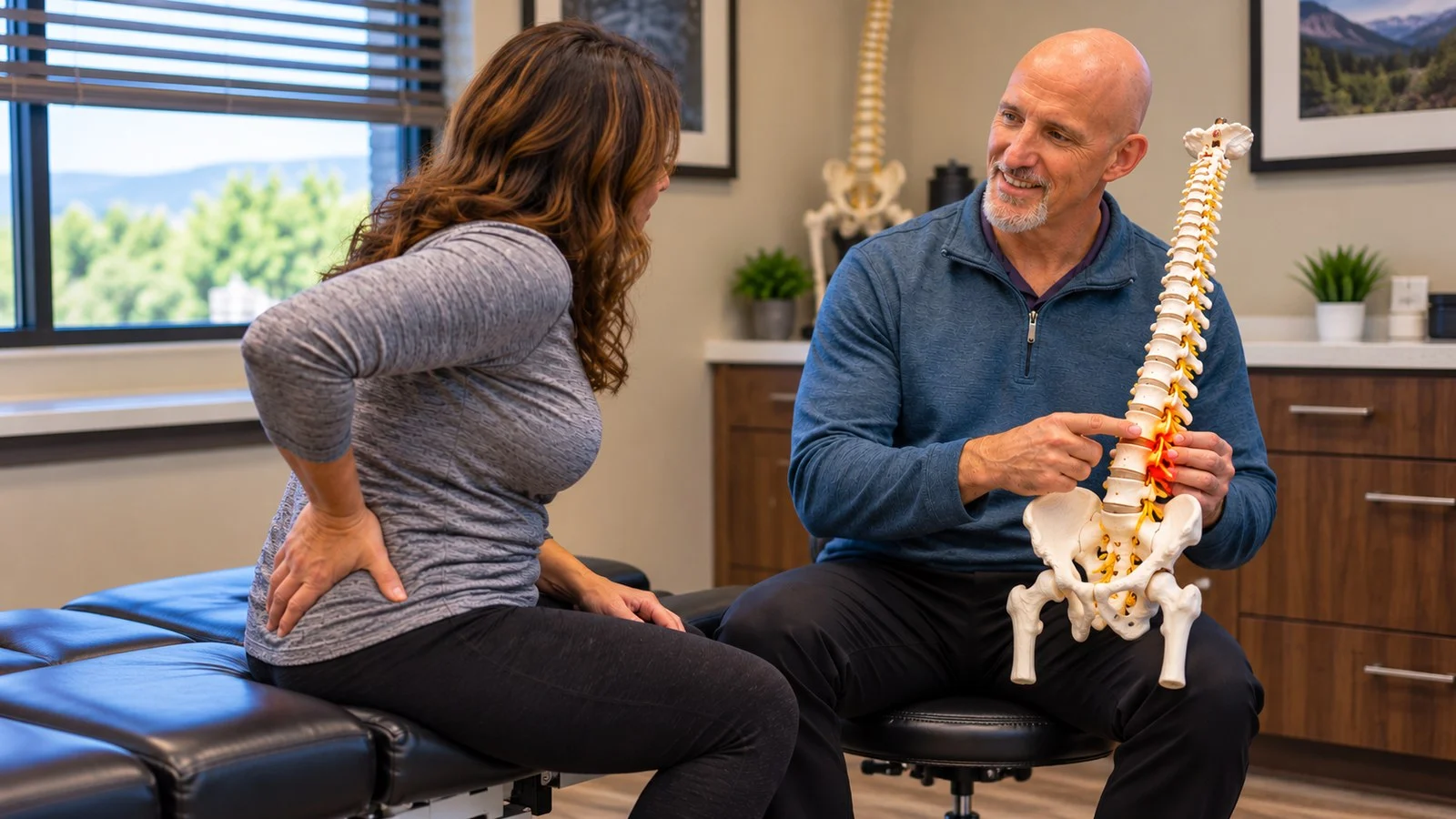
Yes, a chiropractor may help some people with sciatica, depending on what is causing their leg pain and whether chiropractic care is appropriate for their condition. How long recovery takes varies from person to person. The first step is identifying the likely source of the symptoms through a thorough history, examination, and any necessary additional testing.
What Is Sciatica, and How Do You Know If You Have It?
Sciatica describes pain associated with irritation or compression of the sciatic nerve or its nerve roots. The sciatic nerve travels from the lower back through the buttocks and down each leg. When these nerves are affected, symptoms may travel from the lower back or buttock into the thigh, calf, or foot.
People often describe the sensation as sharp, burning, shooting, or electric. Others notice tingling, numbness, or weakness. Symptoms may affect one leg, although pain or other symptoms can sometimes occur on both sides.
However, pain traveling down your leg does not automatically mean you have sciatica. Problems involving muscles, joints, the hip, peripheral nerves, or other structures can produce similar symptoms. The location and pattern of your discomfort provide clues, but they do not establish the cause by themselves.
At Scott Chiropractic, Dr. Scott evaluates what patients describe alongside examination findings to help distinguish suspected sciatica from other conditions that can cause leg pain.
Depending on how soon a person seeks chiropractic care can have a big impact on the speed of which someone responds to care. It’s always best to get checked as soon as possible.
Can a Chiropractor Help Sciatica?
Chiropractic care may be an option for some people with uncomplicated low back pain and related leg symptoms. Depending on the suspected cause and individual examination findings, care may include appropriate spinal manipulation, other manual techniques, movement advice, and corrective exercises. The goal is to address the problems identified during the evaluation and support improvements in function.
Research summarized by the National Center for Complementary and Integrative Health suggests that spinal manipulation may provide modest improvements in pain and function for some people with low back pain. However, evidence specifically addressing sciatica is more limited, and treatment results vary. You can read the organization’s overview of spinal manipulation and its benefits and risks.
Not everyone with leg pain is a suitable candidate for chiropractic treatment. Significant nerve compression, certain underlying medical conditions, or progressive neurological symptoms may require medical evaluation or another treatment approach. A responsible recommendation depends on what the examination reveals.
At Scott Chiropractic in Knoxville, Dr. Scott uses the patient’s history, examination findings, and imaging when clinically indicated to help determine an appropriate course of care. Treatment may involve Diversified, Gonstead, Palmer, Activator Methods, or drop-table techniques when suitable, along with corrective exercises tailored to the individual.
Since lower back pain is one of the most common chronic pain conditions many people come in with that with symptoms down into the legs. Depending on the amount of time someone has had their symptoms Can determine the patient’s overall prognosis.
How Long Does It Take for Sciatica to Improve?
There is no single recovery timeline for sciatica. Some people improve over days or weeks, while others experience symptoms for several months or longer. The time involved depends on the underlying cause, the severity of the problem, how long symptoms have been present, and whether there is significant nerve involvement.
For example, leg pain associated with an episode of uncomplicated low back pain may improve differently from symptoms caused by substantial disc-related nerve compression. Persistent numbness or weakness also deserves particular attention because pain alone does not tell the whole story.
It is important to distinguish between temporary symptom relief and meaningful progress. A person may feel better after a visit but still have limitations with walking, sitting, sleeping, or working. Progress should be assessed using more than one observation.
Dr. Scott uses progress examinations to review how patients are responding and determine whether changes to the care plan are appropriate. If symptoms are not improving as expected, the next step may involve reassessing the original findings, modifying care, or recommending additional medical evaluation.
How Does a Chiropractor Evaluate Sciatica?
A useful evaluation begins with your story. When did the symptoms start? Where does the pain travel? Is there numbness, tingling, or weakness? Does sitting, walking, bending, or another activity change the symptoms? Your answers help guide the examination.
The physical examination may include an assessment of movement, strength, sensation, reflexes, and selected tests that help evaluate nerve involvement. These findings must be considered together rather than relying on one test to determine the diagnosis.
Imaging may be appropriate in selected cases, but it is not automatically necessary for every person with back or leg pain. X-rays can show bones and some structural changes, but they do not directly show the sciatic nerve or provide the same detail about spinal discs as an MRI. If symptoms or examination findings raise concerns that require further investigation, a medical referral or different imaging study may be appropriate.
For more information about the symptoms, possible causes, and treatment options, visit our sciatica information page.
Dr. Scott’s Clinical Experience with Sciatica
When patients come into my office with lower back pain and symptoms extending into the leg, it is important to identify the specific type and pattern of symptoms they are experiencing. Through a thorough examination and appropriate testing, I work to determine whether the problem is sciatica or another condition that may be causing similar symptoms.
I also evaluate whether spinal joint misalignment may be contributing to nerve irritation or whether a disc problem could be involved. Identifying the underlying cause helps determine the most appropriate approach to care.
One thing I’ve observed in my practice is that patients who seek evaluation earlier, rather than waiting for symptoms to persist or worsen, often have a more favorable prognosis. The sooner we can identify what is contributing to the problem, the sooner we can determine the appropriate next steps.
When Should You See a Medical Doctor Instead?
Although some cases of sciatica can be managed conservatively, certain symptoms need prompt medical attention. New or progressive leg weakness, significant changes in sensation, or symptoms that continue to worsen should be medically evaluated rather than managed solely through routine chiropractic visits.
Seek emergency medical care if you develop new loss of bladder or bowel control, difficulty urinating, numbness around the groin or inner thighs, or rapidly progressing weakness in your legs. These symptoms can indicate serious compression of nerves in the lower spine. Do not wait for a routine appointment.
Fever accompanying significant back pain, major trauma, or back pain with a history of cancer or other serious medical conditions may also require prompt medical assessment. The appropriate response depends on the symptoms and your medical history.
If treatment is not helping, your symptoms are changing, or the findings suggest a condition outside the scope of chiropractic care, a referral is an important part of responsible care. The objective is to identify the problem and determine which approach is appropriate, even when that means seeking help from another healthcare professional.
If you are experiencing persistent leg pain and want to find out whether an evaluation at Scott Chiropractic is appropriate, call (865) 693-1911 or ask about the $45 first visit, which includes a consultation, examination, and X-rays if needed. Dr. Scott can review your concerns and discuss the appropriate next steps based on the findings.