$45 New Patient Special — consultation, exam & X-rays (if needed). Call (865) 693-1911 8805 Kingston Pike, Suite 105, Knoxville, TN 37923
Condition

Numbness & Tingling

That "pins and needles" feeling, numbness, or tingling in your arms, hands, legs, or feet often traces back to an irritated or compressed nerve along the spine. At Scott Chiropractic in Knoxville, Dr. Jon Scott carefully evaluates where the nerve is being pinched and addresses the spinal source conservatively — while screening for symptoms that need medical care.

Numbness & Tingling

What are Numbness & Tingling?

Numbness and tingling — clinically called paresthesia — happen when a nerve isn’t sending signals normally. Instead of accurate sensation, you feel “pins and needles,” buzzing, burning, reduced feeling, or that limb-asleep sensation. Most of the time it’s a sign that a nerve is being irritated or compressed somewhere along its path. Because your nerves branch out from the spinal cord through openings between the vertebrae, the spine is one of the most common places that irritation begins.

When a disc bulges, a joint loses normal motion, or surrounding tissue inflames, it can press on or irritate a spinal nerve root. A problem in the neck often shows up as symptoms down the arm into the hand; a problem in the lower back can send tingling down the leg into the foot, as happens with sciatica. The location of your symptoms gives important clues about where the nerve is being affected, and a careful exam helps connect the dots. At the same time, numbness and tingling aren’t always mechanical — they can also stem from conditions like diabetes, nerve disorders, circulation problems, or, less commonly, something more serious. That’s why Dr. Scott evaluates carefully before assuming a spinal cause. When the source is mechanical irritation he can address conservatively, chiropractic care offers a drug-free way to relieve the pressure on the nerve. When it isn’t, he points you toward the right kind of care.

Common symptoms

  • "Pins and needles" or prickling in the arms, hands, legs, or feet
  • Numbness or reduced sensation in a specific area
  • Burning or tingling that follows a line down a limb
  • A limb that frequently "falls asleep"
  • Tingling that worsens with certain neck or back positions
  • Accompanying neck or low-back pain
  • Weakness or clumsiness in the affected hand or foot

Common causes

  • Pinched spinal nerve root — A bulging disc or narrowed nerve opening in the neck or low back can compress a nerve, sending numbness or tingling into the arm or leg.
  • Joint restriction and misalignment — Vertebrae that lose normal motion can irritate nearby nerves and alter the signals they carry.
  • Posture and repetitive strain — Forward-head posture and prolonged positions load the spine unevenly, increasing pressure on sensitive nerve tissue.
  • Sciatica and disc involvement — Irritation of the sciatic nerve from a low-back disc or joint problem commonly produces tingling down the leg and into the foot.
  • Non-spinal causes to rule out — Diabetes, nerve disorders, and circulation problems can also cause paresthesia — which is why careful screening comes first.

When to seek chiropractic care

It’s smart to have persistent numbness or tingling evaluated rather than waiting it out, because catching nerve irritation early gives conservative care its best chance. Some symptoms, though, need urgent medical attention. Seek emergency care right away if numbness or tingling comes on suddenly, is accompanied by face drooping, slurred speech, one-sided weakness, or vision changes (possible stroke), or involves loss of bowel or bladder control, numbness in the groin or inner thighs, or rapidly progressing leg weakness — these can signal serious nerve compression that requires emergency evaluation. Also see a physician promptly if symptoms follow a significant injury, spread to both sides of the body, or come with unexplained weakness. Dr. Scott screens for these red flags first and will refer you for medical testing when your symptoms point to a cause beyond the scope of chiropractic care, such as a metabolic or systemic condition. Conservative care is appropriate when the source is mechanical nerve irritation — and Dr. Scott makes sure that’s the case before proceeding.

Our approach

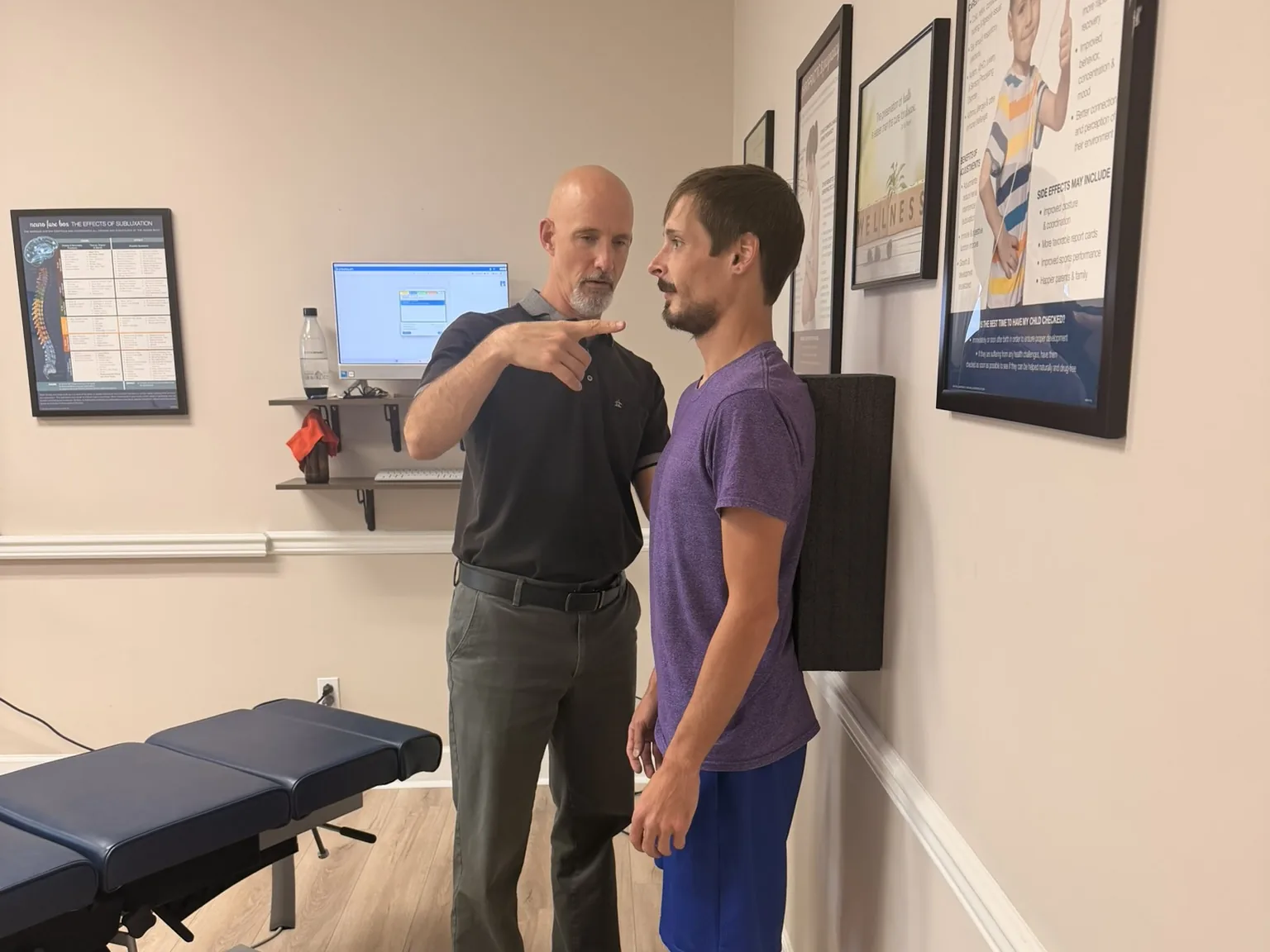
Dr. Scott begins with a detailed history and a thorough neurological and orthopedic exam to locate where your nerve is being irritated and to screen for red flags. Because the pattern of your symptoms points to the source — arm and hand symptoms often originate in the neck, leg and foot symptoms in the low back — he tests sensation, reflexes, and motion to map the problem. X-rays are taken when clinically useful, so care is guided by what he measures rather than guesswork. If anything suggests a non-spinal cause, referral comes first.

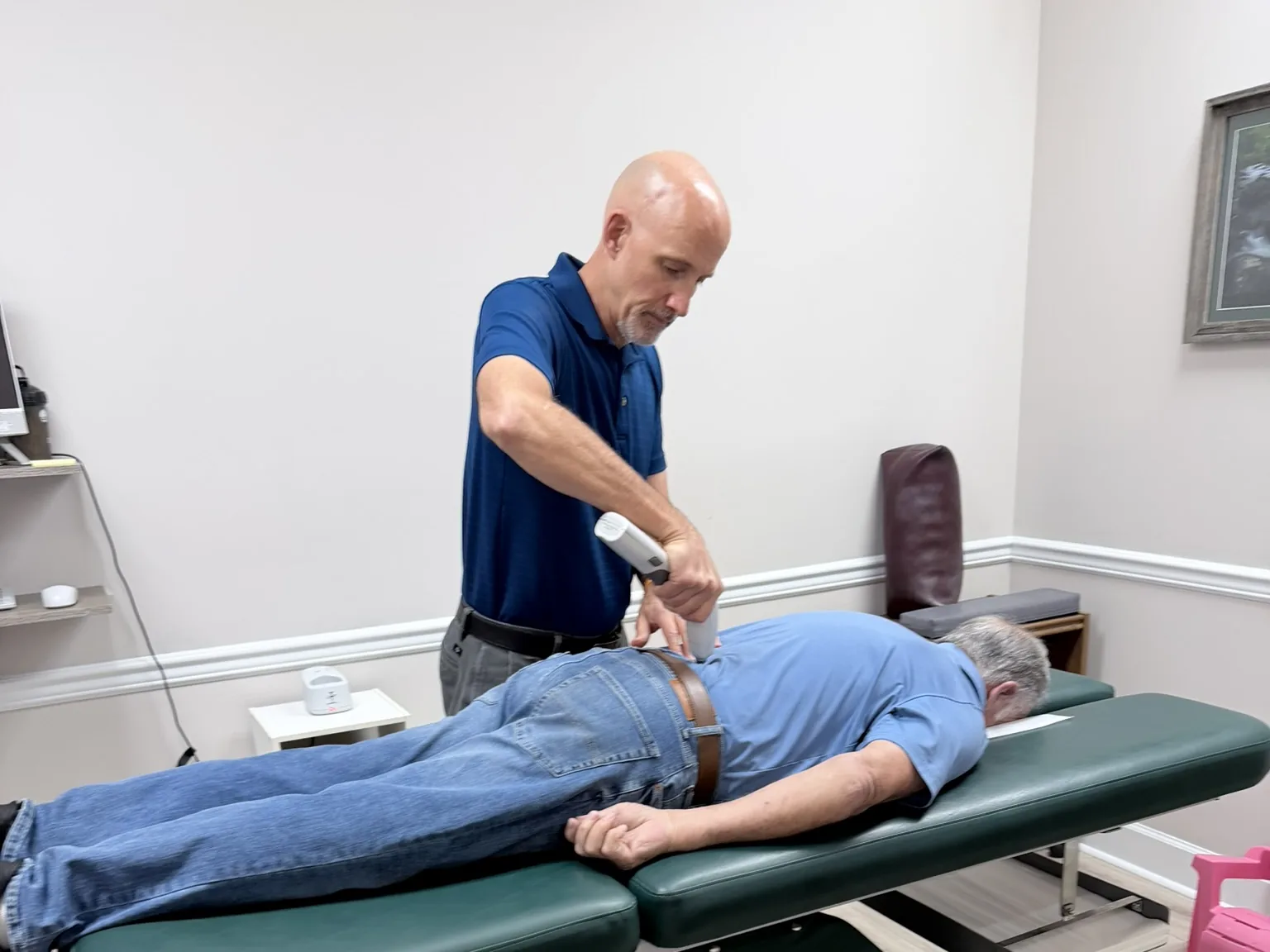
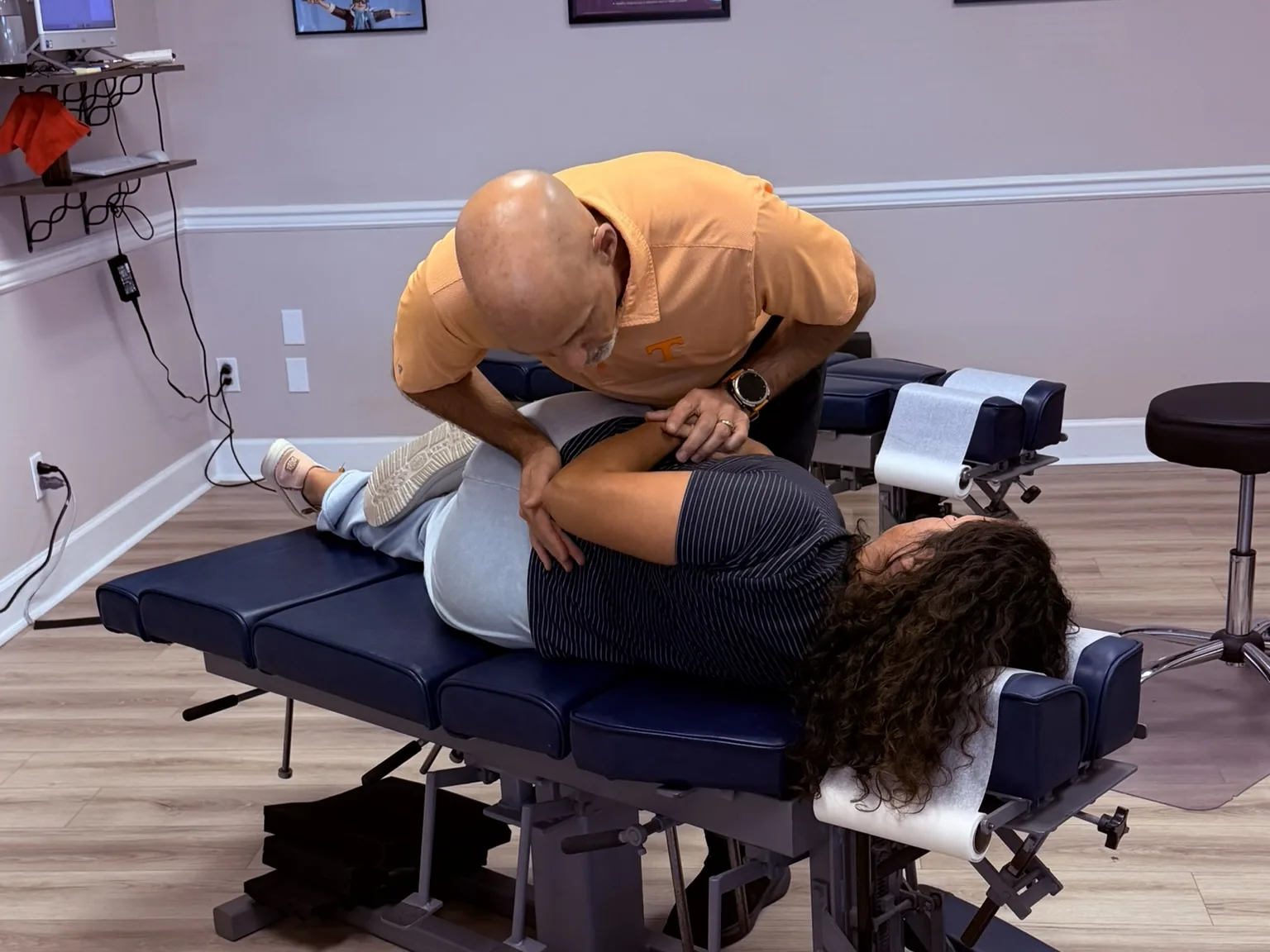
When your evaluation points to mechanical nerve irritation he can address conservatively, care focuses on relieving pressure and restoring normal motion to the affected area of the spine. Dr. Scott uses specific, gentle adjustments to free restricted joints and reduce nerve irritation. With the Activator Method, he can deliver precise, low-force corrections with a handheld instrument — a comfortable option when nerves are sensitive — and he’s also trained in Diversified, Gonstead, Palmer, and Drop Table techniques, so care is matched to your body and comfort. He often pairs adjustments with posture correction, nerve-mobilizing exercises, and ergonomic guidance to keep pressure off the nerve between visits. He also addresses the underlying postural and structural patterns that let symptoms return. The goal is to relieve the numbness and tingling, correct what’s causing it, and give you a clear plan with a real finish line.

Typical care timeline

Relief phase

Duration: Weeks 1–4
Frequency: 2–3 visits per week

Reduce nerve irritation, calm tingling and numbness, and restore comfortable motion in the affected area.

Corrective phase

Duration: Weeks 4–12
Frequency: 1–2 visits per week

Address the underlying disc, joint, and posture problems irritating the nerve and rebuild stability.

Wellness and prevention

Duration: Ongoing as needed
Frequency: Periodic check-ins

Maintain results with posture habits and home exercises so symptoms don't return.

Frequently asked questions

What causes numbness and tingling in my hands or feet?

Most commonly an irritated or compressed nerve. Neck problems often send symptoms into the arm and hand, while low-back problems send them down the leg into the foot. Other causes like diabetes or circulation issues are possible too, so Dr. Scott evaluates carefully before assuming a spinal source.

Can chiropractic care relieve tingling without medication?

When the cause is mechanical nerve irritation, yes — restoring normal joint motion and easing pressure on the nerve is a drug-free way to relieve symptoms. If your numbness points to a non-spinal cause, Dr. Scott will refer you for the appropriate medical care instead.

Is it safe to be adjusted when a nerve is already irritated?

Care is matched to your comfort and findings. The gentle, instrument-based Activator Method delivers a precise, low-force adjustment with no twisting, which is well suited to sensitive nerves. Dr. Scott only proceeds when conservative care is appropriate for your case.

When should I treat numbness as an emergency?

Seek emergency care if it comes on suddenly with face drooping, slurred speech, one-sided weakness, or vision changes, or if you lose bowel or bladder control or have numbness in the groin with leg weakness. These can signal serious conditions that need immediate medical attention.

How long does it take to get relief?

It depends on the cause and how long you’ve had symptoms. Some patients notice less tingling within the first few weeks. After your exam, Dr. Scott gives you a realistic timeline and a plan with a defined finish line.

Written by Dr. Jon Scott, DC — a Knoxville, TN chiropractor with more than 29 years in practice. Learn about Dr. Scott.

Credentials: Doctor of Chiropractic, Cleveland Chiropractic College (1996). Last updated June 26, 2026.

Your solution to pain.

We test, we don't guess. Book your first visit today — new patient special $45.