$45 New Patient Special — consultation, exam & X-rays (if needed). Call (865) 693-1911 8805 Kingston Pike, Suite 105, Knoxville, TN 37923
Condition

Hip Pain

When hip pain is changing how you walk, sit, or sleep, chiropractic care in Knoxville can help. Dr. Jon Scott looks at the hip, pelvis, and the way your spine and gait work together, then corrects the alignment and joint problems behind your discomfort with a measured, goal-oriented plan.

Hip Pain

What is Hip Pain?

Hip pain can be deceptively complex. The hip is a large, weight-bearing ball-and-socket joint, and it works in close partnership with your pelvis, your lower back, and the way you walk. Pain you feel in the hip can come from the joint itself, from the sacroiliac (SI) joints where the pelvis meets the spine, or from muscle imbalances and alignment problems that change how load travels through your body.

Because everything from your low back down to your feet shares the work of standing and walking, a problem in one area shifts stress to another. A misaligned pelvis or a restricted SI joint can throw off your gait, overload one hip, and produce pain that seems to have appeared out of nowhere. Tight hip flexors from long hours of sitting — common among Knoxville’s desk-bound professionals — pull the pelvis out of its neutral position and add to the strain.

This is why Dr. Scott doesn’t treat the hip in isolation. He evaluates the hip joint, the pelvis and SI joints, your posture, and your gait as one connected system. By finding where alignment and movement have broken down, he can address the actual driver of your pain rather than chasing the symptom from joint to joint.

Common symptoms

  • Deep aching in the hip, groin, or buttock
  • Pain that worsens with walking, stairs, or standing up
  • Stiffness or reduced range of motion in the hip
  • Pain that radiates from the low back or pelvis into the hip
  • Discomfort when lying on the affected side at night
  • A sense of the hip catching, locking, or feeling unstable
  • Uneven gait or favoring one leg

Common causes

  • Pelvic and SI joint misalignment — When the pelvis or sacroiliac joints lose their normal position or motion, load is distributed unevenly through the hips, producing pain and altering how you walk.
  • Poor posture and prolonged sitting — Long hours seated tighten the hip flexors and pull the pelvis forward, changing hip mechanics and overloading the joint and surrounding muscles.
  • Gait imbalance and leg-length differences — An uneven stride or functional leg-length difference shifts extra stress onto one hip, leading to wear, irritation, and compensating muscle tension.
  • Muscle imbalance and weakness — Weak or tight glutes, hip flexors, and core muscles fail to stabilize the pelvis, leaving the hip joint to absorb forces it isn't meant to handle alone.
  • Old injuries and degenerative change — Past falls, sports injuries, or years of uneven loading can leave lasting alignment changes and joint wear that flare into persistent hip pain.

When to seek chiropractic care

Most hip pain is mechanical and responds well to conservative chiropractic care, but certain signs call for prompt medical evaluation. Seek immediate care if your hip pain follows a fall or trauma, if you cannot bear weight on the leg, or if the hip looks deformed — these can indicate a fracture, especially in older adults. See a physician right away if you have progressive weakness or numbness in the leg, loss of bladder or bowel control, fever, redness, or swelling, or unexplained weight loss, as these may point to infection, nerve compression, or other conditions needing medical management. When you visit Scott Chiropractic, Dr. Scott performs a thorough exam and takes X-rays when useful. If your case needs advanced imaging, lab work, or orthopedic evaluation, he will refer you to the appropriate provider so you get the right care.

Our approach

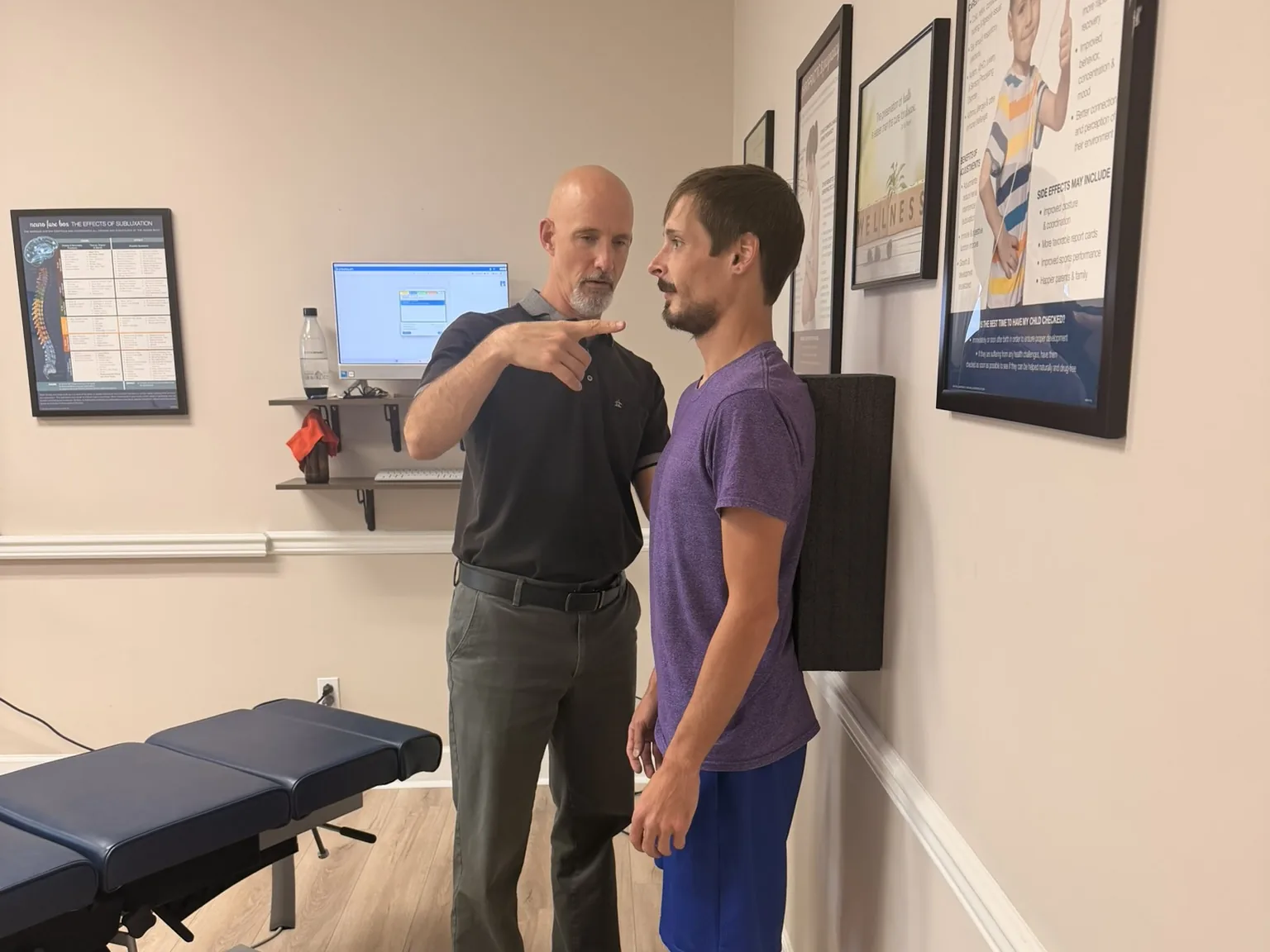
Dr. Scott begins every new-patient visit with a consultation to understand your history, your activity level, and what makes the pain better or worse. He then performs a comprehensive exam of the hip, pelvis, SI joints, posture, and gait, with X-rays when they are clinically useful. Because hip pain so often traces back to the pelvis and low back, he evaluates the whole region rather than the painful spot alone — measuring what’s happening instead of guessing.

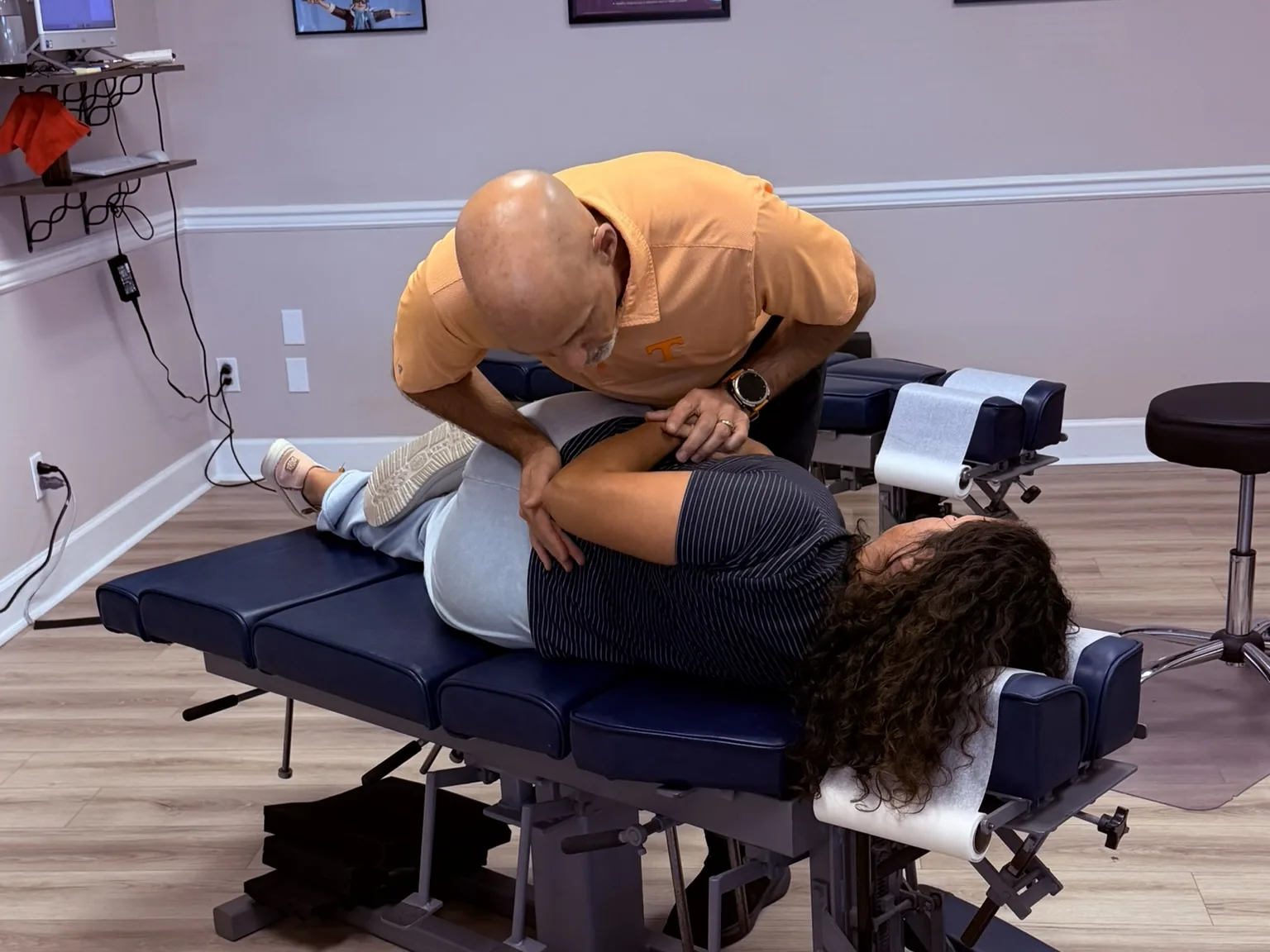
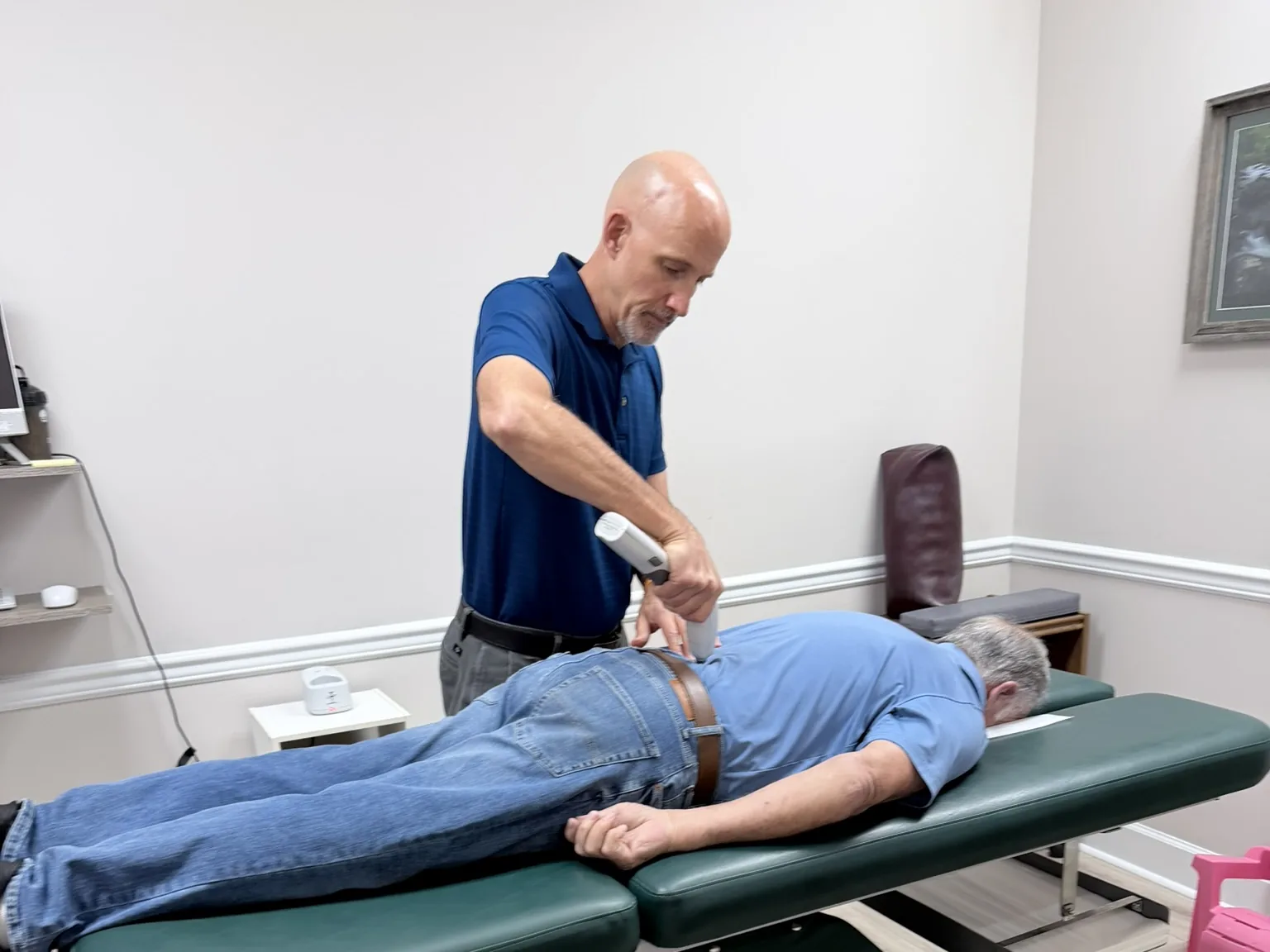
Treatment is then matched to your body and comfort. Dr. Scott is trained in Diversified, Gonstead, Palmer, and Drop Table techniques, and with the Activator Method, he can use gentle, low-force instrument adjusting when that’s the better fit. For patients whose hip pain is driven by posture and pelvic alignment, he uses Chiropractic BioPhysics (CBP) postural correction exercises to help restore a neutral, balanced pelvis.

You can expect care that restores motion to restricted hip and SI joints, rebalances the pelvis, and addresses the posture and gait patterns that overload the hip. Dr. Scott may also guide corrective exercises to strengthen the muscles that stabilize your pelvis. The aim is lasting correction with a clear finish line, not an open-ended schedule.


Typical care timeline

Relief care

Duration: First 2–4 weeks
Frequency: 2–3 visits per week

Reduce pain and inflammation, restore early motion to the hip and SI joints, and ease the muscle tension guarding the area.

Corrective care

Duration: Weeks 4–12
Frequency: 1–2 visits per week

Rebalance the pelvis, correct alignment and gait problems, and strengthen the muscles that stabilize the hip.

Wellness and maintenance

Duration: Ongoing as desired
Frequency: Periodic check-ups

Maintain pelvic balance and hip mobility, and catch early signs of strain before they become pain again.

Frequently asked questions

Can a chiropractor help hip pain?

Yes, for the many cases of hip pain rooted in pelvic alignment, SI joint dysfunction, posture, and gait, chiropractic is an effective conservative option. Dr. Scott examines the whole region to find the true driver. If your pain stems from a problem that needs orthopedic or surgical care, he will refer you.

Is my hip pain actually coming from my back or pelvis?

Often, yes. The low back, pelvis, and SI joints work together with the hip, and a problem in one shifts stress to the others. Pain felt in the hip frequently originates in the pelvis or spine, which is why Dr. Scott evaluates the entire system.

Will the adjustment be gentle?

It can be. Care is matched to your comfort, and with the Activator Method, Dr. Scott can use a gentle, low-force instrument with no twisting or popping — a good option if your hip is very painful or you simply prefer a lighter touch.

How long will it take to feel relief?

It depends on the cause and how long you’ve had the pain. Many patients notice improvement within the first few weeks, while correcting long-standing pelvic and posture problems takes longer. After your exam, Dr. Scott gives you a clear, realistic plan.

Do I need a referral to see Dr. Scott in Knoxville?

No. You can see Dr. Scott directly, and most insurance plans cover chiropractic care without a medical referral. New patients can start with our $45 new-patient special (not valid for Medicare, workers’ comp or auto-accident cases).

Written by Dr. Jon Scott, DC — a Knoxville, TN chiropractor with more than 29 years in practice. Learn about Dr. Scott.

Credentials: Doctor of Chiropractic, Cleveland Chiropractic College (1996). Last updated June 26, 2026.

Your solution to pain.

We test, we don't guess. Book your first visit today — new patient special $45.