$45 New Patient Special — consultation, exam & X-rays (if needed). Call (865) 693-1911 8805 Kingston Pike, Suite 105, Knoxville, TN 37923
Condition

Shoulder Pain

If shoulder pain is making it hard to reach, lift, or sleep, chiropractic care in Knoxville may help. Dr. Jon Scott looks at both the shoulder itself and the neck and upper spine that feed it, then corrects the underlying joint and posture problems driving your discomfort.

Shoulder Pain

What is Shoulder Pain?

Shoulder pain is one of the most common complaints Dr. Scott sees, and it rarely has a single, obvious cause. The shoulder is the most mobile joint in your body, which makes it powerful and also vulnerable. Pain can come from the shoulder joint and rotator cuff directly, or it can be referred — meaning the real problem sits in your neck or upper spine, and the shoulder is simply where you feel it.

When a vertebra in the neck or upper back loses its normal position or motion, it can irritate the nerves that travel down into the shoulder and arm. The result feels like a shoulder problem, but treating the shoulder alone often doesn’t fix it. That is why Dr. Scott examines the whole region — the shoulder joint, the surrounding muscles, your posture, and the cervical and thoracic spine that connect to it.

Posture plays a larger role than most people realize. Years of desk work, driving, and looking down at phones pull the shoulders forward and round the upper back. That forward-head, rounded-shoulder posture changes the mechanics of the shoulder joint and overloads the rotator cuff. In Knoxville, where so many patients work long hours at a desk, this pattern is something Dr. Scott addresses every day.

Common symptoms

  • Aching or sharp pain deep in the shoulder joint
  • Pain that radiates from the neck into the shoulder or down the arm
  • Stiffness or reduced range of motion when reaching or lifting
  • Difficulty sleeping on the affected side
  • Weakness when raising or rotating the arm
  • Clicking, catching, or a pinching sensation with movement
  • Tightness across the upper back and base of the neck

Common causes

  • Referred pain from the neck or upper spine — Restricted or misaligned vertebrae in the cervical and thoracic spine can irritate nerves that supply the shoulder, producing pain that feels local but originates higher up.
  • Poor posture and forward-rounded shoulders — Prolonged desk work, driving, and phone use round the upper back and shift the shoulder forward, changing joint mechanics and straining the rotator cuff over time.
  • Rotator cuff strain or overuse — Repetitive overhead motion, lifting, or sports can inflame and overload the rotator cuff muscles and tendons that stabilize the shoulder.
  • Joint restriction and muscle imbalance — When the shoulder blade and upper-back joints don't move freely, surrounding muscles compensate, creating tension, knots, and uneven loading of the joint.
  • Old injuries that never fully resolved — A fall, a sports injury, or a strain from years ago can leave lasting changes in alignment and movement that flare into chronic pain.

When to seek chiropractic care

Most shoulder pain is mechanical and responds well to conservative chiropractic care, but some situations call for prompt medical evaluation. Seek immediate care if your shoulder pain follows a significant fall or trauma, if the joint looks deformed or you cannot use the arm at all, or if you have progressive weakness, numbness, or loss of sensation in the arm or hand. Shoulder or upper-arm pain accompanied by chest pressure, shortness of breath, sweating, or jaw pain can signal a heart problem and is a medical emergency — call 911. Also see a physician if pain comes with fever, redness, swelling, or unexplained weight loss. When you visit Scott Chiropractic, Dr. Scott performs a thorough exam and takes X-rays when useful, and he will refer you to the appropriate provider if your case needs imaging, lab work, or medical management beyond chiropractic care.

Our approach

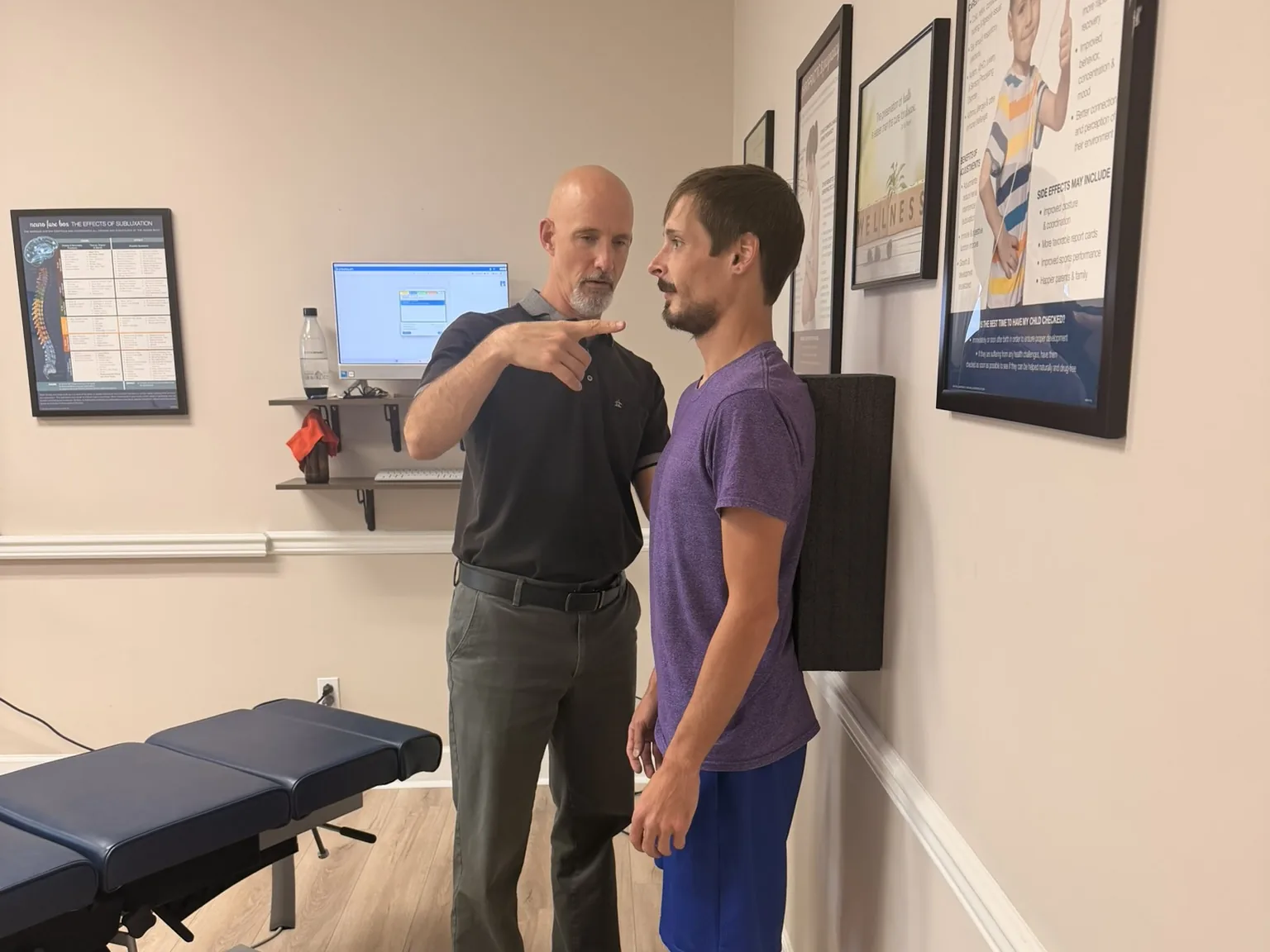
Dr. Scott starts every new-patient visit with a consultation to understand your history, your work, and what makes the pain better or worse. He then performs a comprehensive exam of the shoulder, the surrounding muscles, your posture, and the neck and upper spine — because the cause is often not where the pain is. X-rays are taken when they are clinically useful, so care is based on what he measures rather than what he guesses.

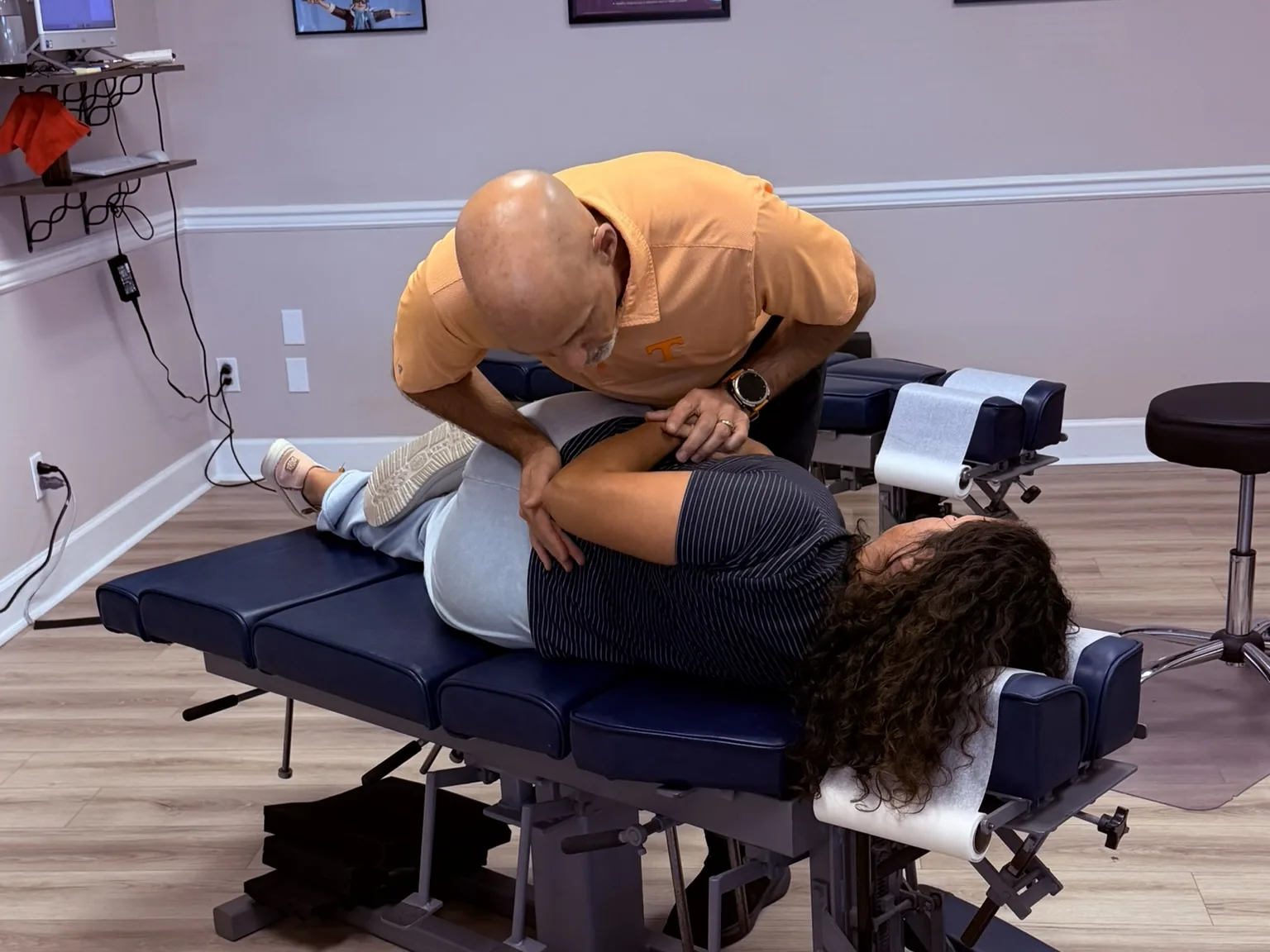
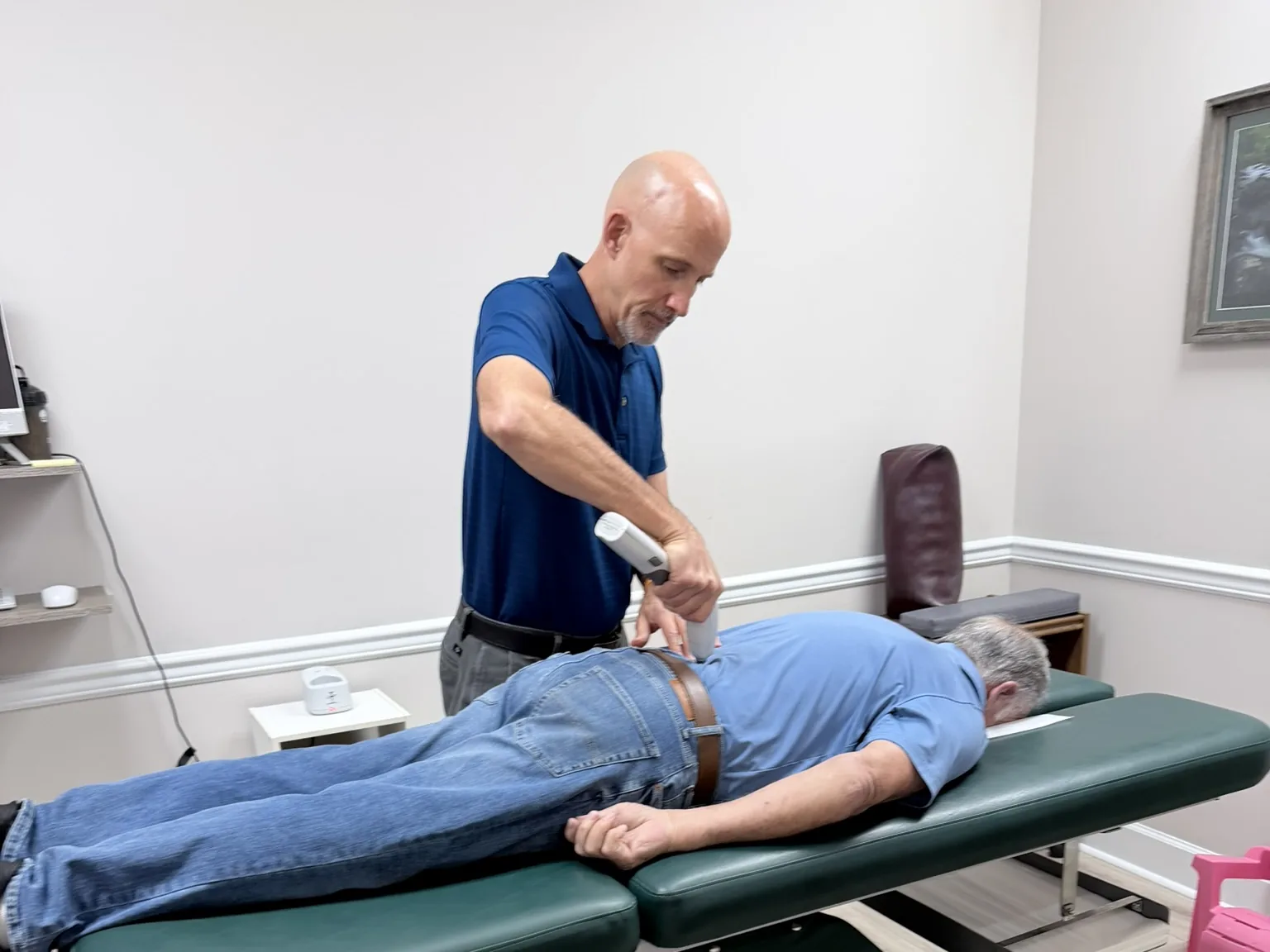
From there, treatment is matched to your body and comfort level. Dr. Scott is trained in Diversified, Gonstead, Palmer, and Drop Table techniques, and with the Activator Method, he can deliver gentle, low-force adjustments with a handheld instrument when that suits you better. For patients with posture-driven shoulder problems, he uses Chiropractic BioPhysics (CBP) postural correction exercises to retrain the forward-head, rounded-shoulder posture that overloads the joint.

You can expect care that addresses both the symptom and its source: restoring motion to restricted joints, easing nerve irritation in the neck and upper back, and rebuilding the posture and mechanics that keep the shoulder healthy. The goal is not an endless schedule, but a clear plan with a real finish line.

Typical care timeline

Relief care

Duration: First 2–4 weeks
Frequency: 2–3 visits per week

Reduce pain and inflammation, calm nerve irritation, and restore early range of motion in the shoulder and upper spine.

Corrective care

Duration: Weeks 4–12
Frequency: 1–2 visits per week

Correct the underlying joint and posture problems, rebuild stability, and address the forward-rounded posture driving the strain.

Wellness and maintenance

Duration: Ongoing as desired
Frequency: Periodic check-ups

Hold the gains, keep the shoulder and spine moving well, and catch small problems before they return.

Frequently asked questions

Can a chiropractor help shoulder pain, or should I see an orthopedist?

Chiropractic is an excellent conservative first step for most mechanical shoulder pain, especially when the neck, upper spine, and posture are involved. Dr. Scott will examine you thoroughly, and if your case needs orthopedic imaging or surgical evaluation, he will refer you to the right provider.

Why does my shoulder hurt when the problem might be in my neck?

The nerves that supply your shoulder and arm originate in your neck and upper spine. When those vertebrae are restricted or irritated, the pain can be felt in the shoulder — which is why treating the shoulder alone often doesn’t last. Dr. Scott examines the whole region to find the true source.

Is the adjustment going to hurt my already-painful shoulder?

Care is matched to your comfort. Dr. Scott often works on the neck and upper spine rather than forcing a painful shoulder, and with the Activator Method, he can use a gentle, low-force instrument when you prefer no twisting or popping.

How long until my shoulder feels better?

It depends on what’s causing the pain and how long you’ve had it. Many patients feel improvement within the first few weeks, while correcting long-standing posture problems takes longer. After your exam, Dr. Scott gives you a clear, realistic plan.

Do I need a referral to see Dr. Scott in Knoxville?

No. You can see Dr. Scott directly, and most insurance plans cover chiropractic care without a medical referral. New patients can start with our $45 new-patient special (not valid for Medicare, workers’ comp or auto-accident cases).

Written by Dr. Jon Scott, DC — a Knoxville, TN chiropractor with more than 29 years in practice. Learn about Dr. Scott.

Credentials: Doctor of Chiropractic, Cleveland Chiropractic College (1996). Last updated June 26, 2026.

Your solution to pain.

We test, we don't guess. Book your first visit today — new patient special $45.