$45 New Patient Special — consultation, exam & X-rays (if needed). Call (865) 693-1911 8805 Kingston Pike, Suite 105, Knoxville, TN 37923
Condition

Headaches & Migraines

Many headaches and migraines are linked to tension and dysfunction in the neck, and chiropractic can help. At Scott Chiropractic in Knoxville, Dr. Jon Scott looks for the spinal and postural causes behind recurring headaches, then builds a corrective plan designed to reduce how often and how hard they hit, without relying on medication alone.

Headaches & Migraines

What are Headaches & Migraines?

Headaches come in several forms, and two of the most common, tension headaches and cervicogenic headaches, are closely tied to the neck. A tension headache often feels like a tight band of pressure around the head, building through the day from tight muscles in the neck and shoulders. A cervicogenic headache literally originates in the cervical spine, where irritated joints and nerves in the upper neck refer pain up into the head, often felt on one side, behind the eye, or at the base of the skull.

Migraines are different and more complex, typically involving throbbing pain, sensitivity to light and sound, and sometimes nausea or visual changes. While migraines have neurological and vascular components, many people find that neck tension and poor posture act as triggers, and that improving how the neck and upper spine function reduces how often migraines are set off.

The connection comes down to anatomy. The nerves of the upper neck share pathways with those that carry sensation to the head, so when cervical joints lose motion or the neck’s natural curve flattens from forward posture, that dysfunction can translate into head pain. Because so many recurring headaches have a mechanical, posture-related component, they often respond to the same corrective care that addresses the spine, rather than only treating the symptom with medication.

Common symptoms

  • Tight, band-like pressure around the head
  • Pain starting at the base of the skull or in the neck
  • One-sided head pain, sometimes behind the eye
  • Throbbing pain with sensitivity to light or sound
  • Headaches that worsen after long hours at a desk or screen
  • Neck and shoulder stiffness accompanying the headache
  • Recurring headaches that keep returning despite medication

Common causes

  • Neck tension and muscle tightness — Tight muscles in the neck and shoulders refer pain up into the head, a hallmark of tension headaches.
  • Poor posture and tech neck — Forward head posture from screens and phones strains the upper neck and can flatten its natural curve, a common headache trigger.
  • Cervical joint restriction — Upper-neck joints that lose normal motion irritate nearby nerves that share pathways with those serving the head.
  • Loss of the neck's natural curve — When the healthy cervical curve flattens or reverses, the spine bears load abnormally and can contribute to recurring head pain.
  • Stress and muscle guarding — Physical and emotional stress keep the neck and shoulder muscles clenched, feeding tension-type headaches.
  • Whiplash or past neck injury — Lingering joint and soft-tissue dysfunction after a neck injury can become an ongoing source of headaches.

When to seek chiropractic care

Many recurring headaches are mechanical and respond well to conservative chiropractic care, but some headaches are warning signs that need prompt medical evaluation. Seek immediate care for a sudden, severe headache unlike any you have had before (often described as the worst of your life), a headache following a head injury or accident, or head pain accompanied by fever and a stiff neck, confusion, slurred speech, vision loss, weakness or numbness on one side of the body, loss of coordination, or seizures. These can signal serious conditions that require urgent attention rather than routine care.

For the recurring tension and cervicogenic headaches that build from neck strain, posture, and stress, there is no reason to simply medicate them indefinitely. Headaches that keep returning, are tied to neck stiffness, or worsen with screen time deserve a proper evaluation of the spine. At Scott Chiropractic, Dr. Scott examines your neck and upper spine and takes X-rays when they are clinically useful to understand what is feeding your headaches before any care begins. Chiropractic is conservative, non-invasive care, and it is often a productive place to start for neck-related head pain.

Our approach

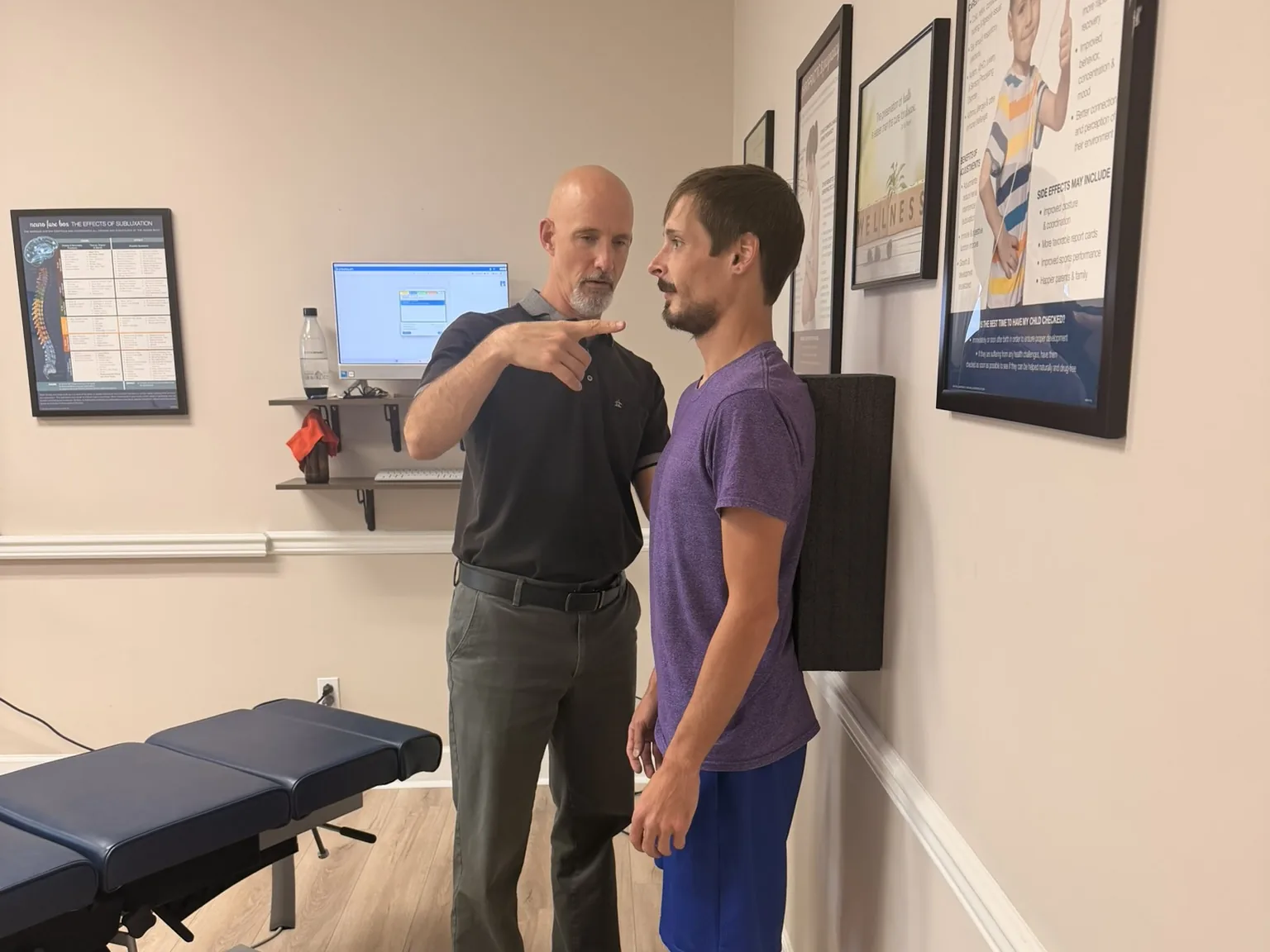
When headaches keep coming back, Dr. Scott looks for the mechanical cause rather than treating each episode in isolation. Every new patient begins with a consultation about your headache patterns, triggers, work habits, and history, followed by a comprehensive exam and X-rays when they are clinically useful. For headaches especially, the upper cervical spine is the focus: those X-rays reveal whether your neck’s natural curve has flattened, where joints have lost motion, and how your posture may be feeding the pain. He then explains exactly what he finds and what it will take to correct it.

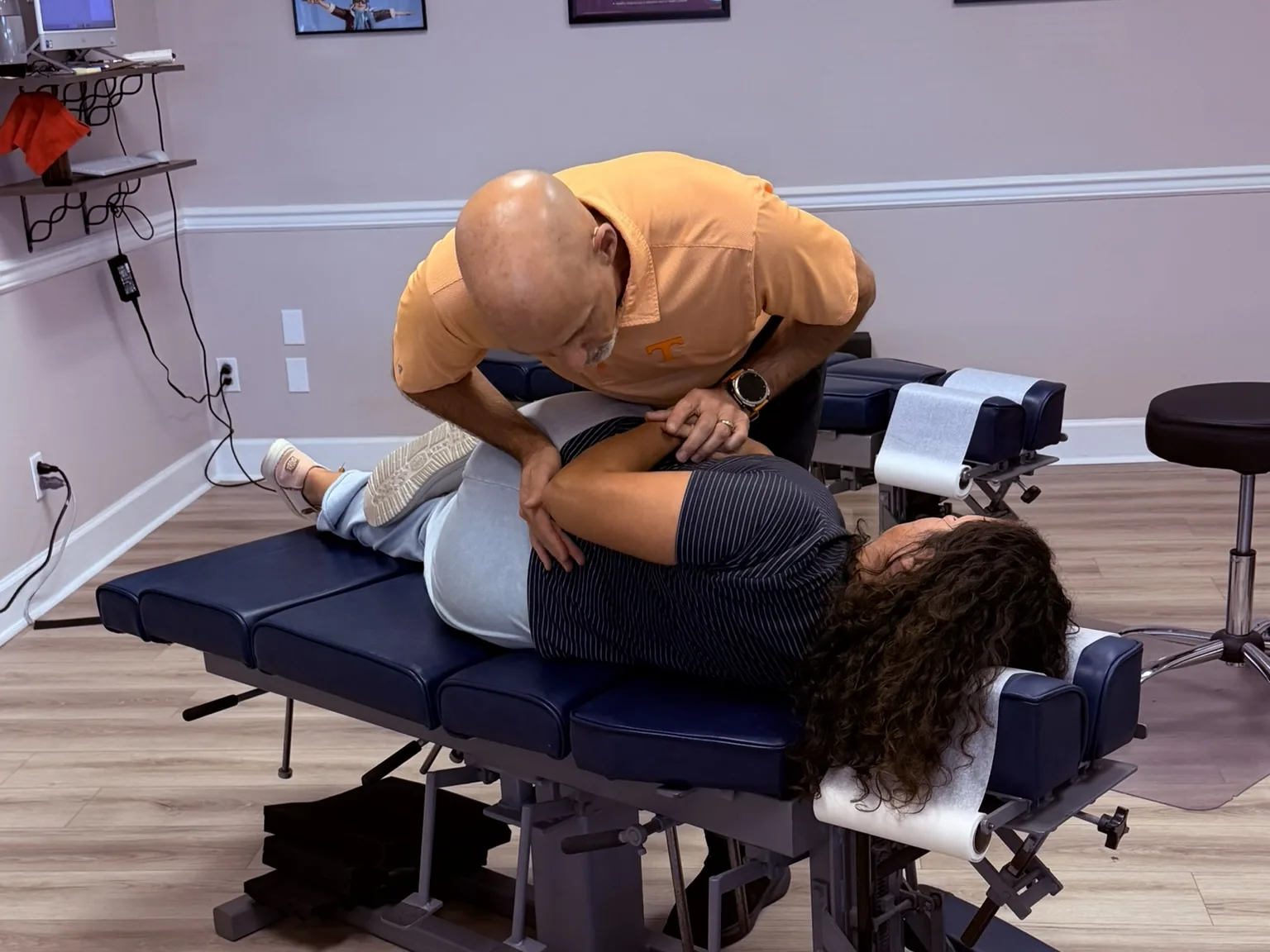
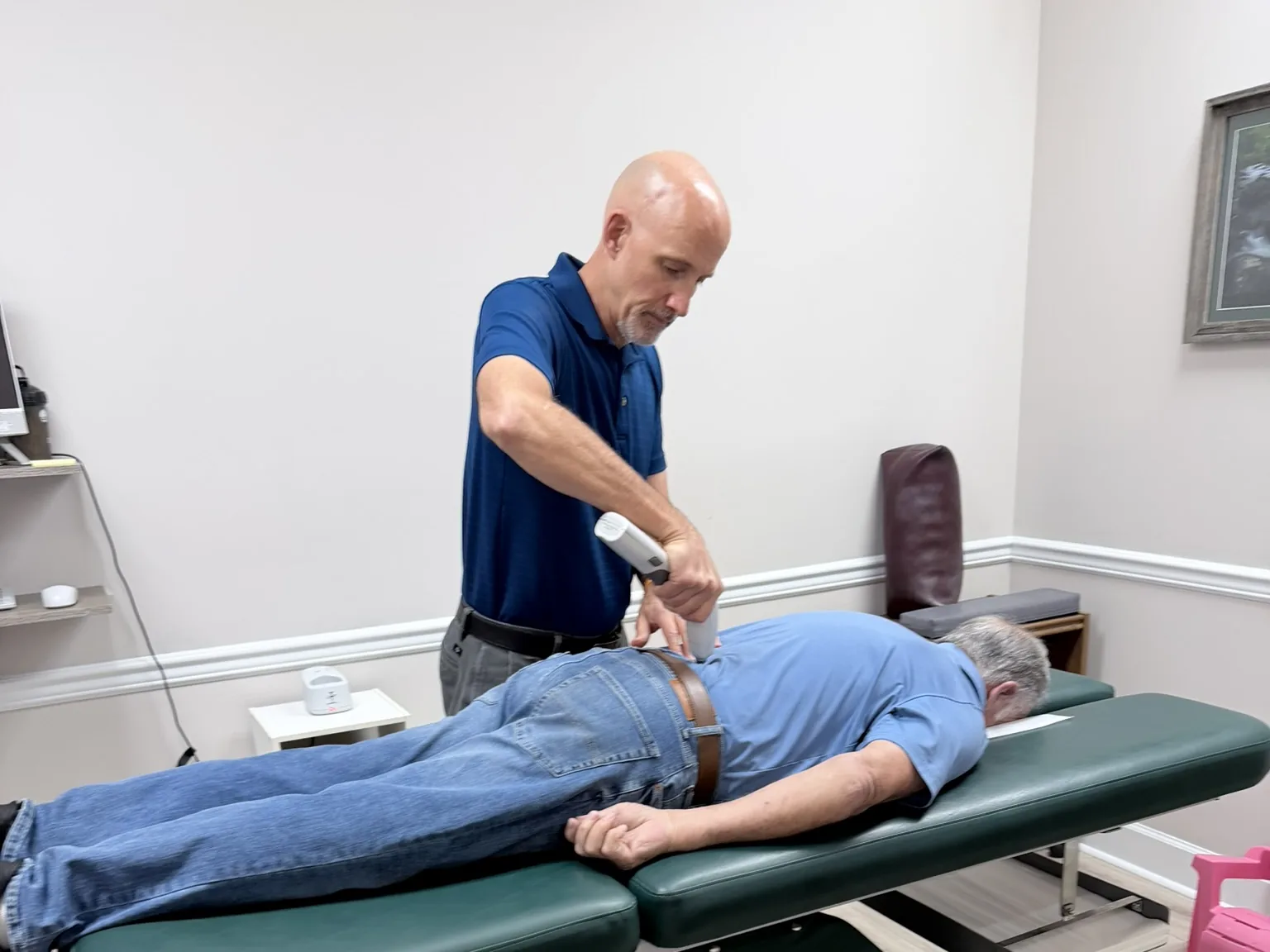
Care is matched to your comfort, which matters when your head already hurts. With the Activator Method, Dr. Scott can deliver precise, gentle, low-force adjustments to the neck with a handheld instrument, no forceful twisting required. He is also trained in Diversified, Gonstead, Palmer, and Drop Table techniques for patients who prefer traditional hands-on adjusting.

Because so many recurring headaches trace back to lost cervical curve and forward posture, Dr. Scott uses Chiropractic BioPhysics (CBP) X-ray analysis and postural correction exercises. That approach aims to rebuild healthy neck alignment rather than just loosen tight joints, addressing a root trigger of cervicogenic and tension headaches. He often pairs adjustments with posture-focused corrective exercises you can do at home. The goal is fewer and less severe headaches through structural correction, with a clear, goal-oriented plan that has a real finish line.


Typical care timeline

Relief

Duration: 2 to 6 weeks
Frequency: Often 2 to 3 visits per week

Ease neck tension and joint restriction to reduce headache frequency and intensity and bring early comfort.

Correction

Duration: 1 to several months
Frequency: Tapering as you improve

Rebuild healthy cervical alignment and posture and retrain supporting muscles to address the root triggers so headaches become less frequent.

Wellness

Duration: Ongoing as you choose
Frequency: Periodic check-ins

Protect your gains against daily screen and posture strain and keep headache triggers from rebuilding.

Frequently asked questions

Can chiropractic care really help with headaches and migraines?

For headaches with a neck-related, mechanical component, which includes many tension and cervicogenic headaches, chiropractic can help reduce how often and how hard they hit. While migraines are more complex, many patients find that improving neck function and posture reduces their triggers. Dr. Scott focuses on correcting the spinal causes rather than only masking the pain.

How is neck function connected to my headaches?

The nerves of the upper neck share pathways with those that carry sensation to the head, so when cervical joints lose motion or your neck’s curve flattens from forward posture, that dysfunction can refer pain into the head. Correcting the alignment and motion of the upper spine often relieves these headaches at their source.

Are the adjustments safe and gentle for someone with frequent headaches?

Yes. Dr. Scott examines you and reviews X-rays when useful before adjusting, and he tailors the technique to your comfort. With the Activator Method, he can use a gentle, instrument-based, low-force approach with no forceful twisting, which many headache patients appreciate.

How soon might my headaches improve?

Many patients notice their headaches becoming less frequent or less intense within the first few weeks, though it depends on the cause and how long the pattern has been building. Lasting correction of posture and alignment takes longer, so Dr. Scott gives you a realistic timeline after your exam.

Should I stop my headache medication if I start chiropractic care?

Never change prescribed medication without talking to the doctor who prescribed it. Chiropractic care works alongside your medical care by addressing mechanical causes of head pain, and many patients find they rely on medication less as their neck function improves, but that should always be a decision made with your physician.

Written by Dr. Jon Scott, DC — a Knoxville, TN chiropractor with more than 29 years in practice. Learn about Dr. Scott.

Credentials: Doctor of Chiropractic, Cleveland Chiropractic College (1996). Last updated June 26, 2026.

Your solution to pain.

We test, we don't guess. Book your first visit today — new patient special $45.