$45 New Patient Special — consultation, exam & X-rays (if needed). Call (865) 693-1911 8805 Kingston Pike, Suite 105, Knoxville, TN 37923
Condition

Vertigo & Dizziness

When the room spins or you feel off-balance, it's unsettling — and the cause matters. At Scott Chiropractic in Knoxville, Dr. Jon Scott carefully evaluates dizziness that may be linked to the upper neck (cervicogenic dizziness) and, just as importantly, helps make sure your symptoms are properly screened so you get the right kind of care.

Vertigo & Dizziness

What are Vertigo & Dizziness?

Dizziness is a broad word for several different sensations: true vertigo, where the room or your head feels like it’s spinning; lightheadedness, where you feel faint; and unsteadiness, where balance feels off. These can come from many sources — the inner ear, blood pressure, medications, dehydration, neurological conditions, and sometimes the neck. Because the list of possible causes is so wide, careful evaluation comes first. Dizziness is one symptom that should never be brushed off or self-diagnosed.

One contributor that’s often overlooked is the upper cervical spine. The joints, muscles, and nerves of the neck send constant position information to your brain, working alongside your inner ear and your eyes to keep you balanced. When the upper neck is stiff, injured, or misaligned — for example after whiplash or with long-standing tension — that information can become unreliable, and the brain receives mixed signals. The result, sometimes called cervicogenic dizziness, tends to feel like unsteadiness or imbalance that’s linked to neck pain, stiffness, or certain head positions rather than violent spinning. It’s a real and treatable pattern, but it’s also a diagnosis of careful exclusion: Dr. Scott’s first job is to determine whether your dizziness fits a neck-related picture or whether it points to something that needs medical evaluation instead. That cautious approach protects you.

Common symptoms

  • A sense of imbalance or unsteadiness, especially with neck movement
  • Dizziness that accompanies neck pain or stiffness
  • Lightheadedness when turning or tilting the head
  • A "foggy" or disconnected feeling along with neck tension
  • Symptoms that flare after prolonged poor posture
  • Headaches at the base of the skull alongside the dizziness
  • Feeling worse after long periods looking down at a phone or desk

Common causes

  • Upper-neck joint dysfunction — Stiff or restricted joints in the upper cervical spine can feed faulty position signals to the brain, contributing to imbalance.
  • Whiplash or neck injury — Car accidents and falls can disrupt the neck's sensory input and trigger dizziness that lingers after the initial injury.
  • Chronic posture strain — Long hours with the head forward overload the upper neck and the muscles that help coordinate balance.
  • Muscle tension and tightness — Sustained tension in the suboccipital muscles at the base of the skull can accompany cervicogenic dizziness.
  • Non-cervical sources to rule out — Inner-ear conditions, blood pressure changes, and neurological issues can cause dizziness too — which is why screening comes first.

When to seek chiropractic care

Dizziness deserves a careful, medically responsible approach, and some symptoms need emergency care — not a chiropractor. Call 911 or seek immediate medical attention if dizziness comes with sudden severe headache, slurred speech, facial drooping, double or lost vision, weakness or numbness on one side of the body, trouble walking, fainting, chest pain, or a severe spinning episode that won’t stop. These can signal a stroke or other serious condition. You should also see your physician promptly if dizziness is new, recurrent, severe, or accompanied by hearing loss, ringing in the ears, or a recent head injury. Dr. Scott takes this seriously: he screens carefully before offering any care, and if your symptoms suggest an inner-ear, cardiovascular, or neurological cause, he will refer you to the appropriate medical provider rather than treat the neck. Only when dizziness fits a cervicogenic pattern — clearly tied to neck dysfunction and cleared of red flags — is conservative chiropractic care appropriate. That careful filtering is part of keeping you safe.

Our approach

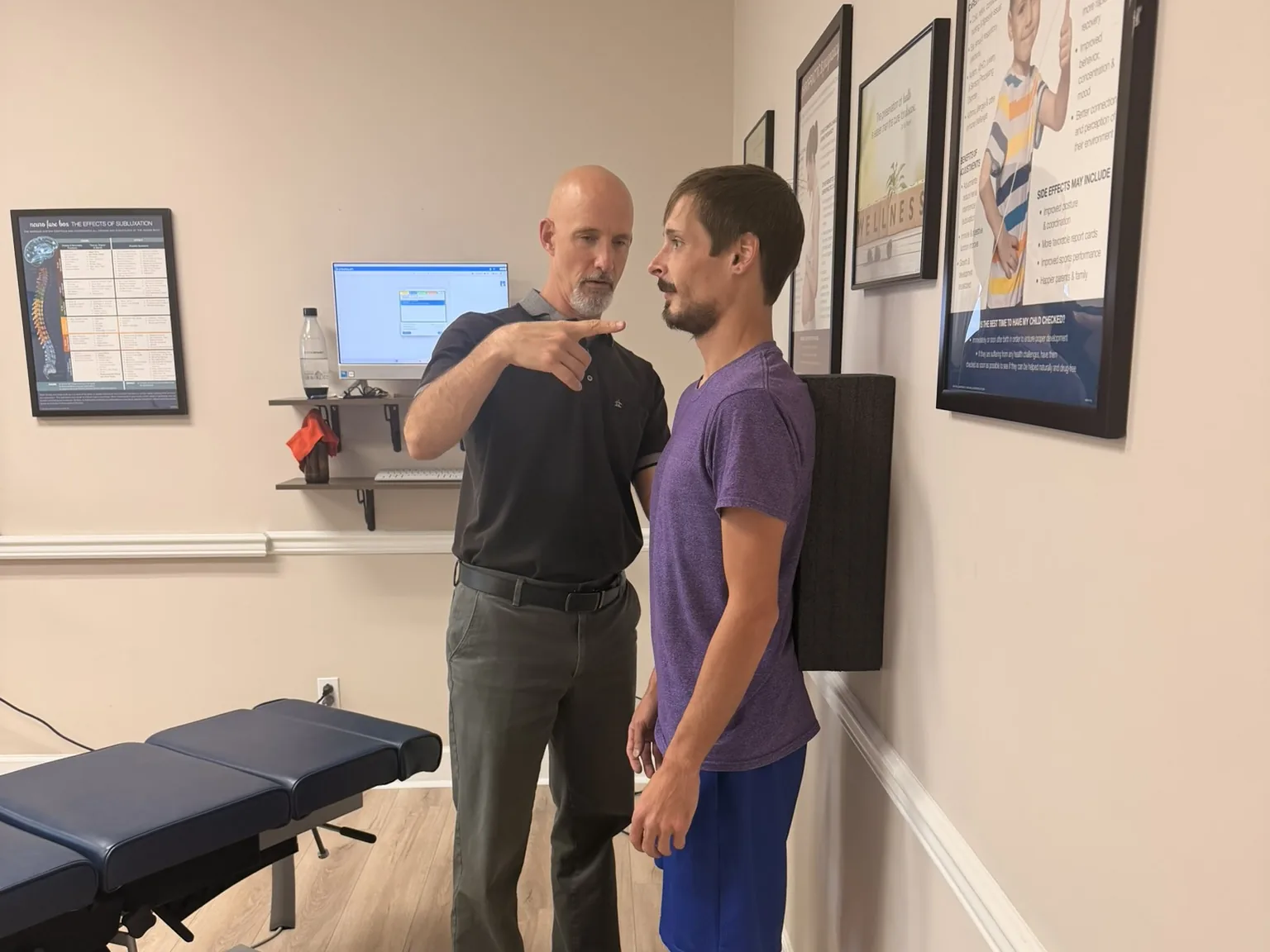
Dr. Scott’s first priority is a thorough history and examination to understand what kind of dizziness you’re experiencing and what’s likely driving it. He asks how your symptoms behave, screens for the red flags that point to inner-ear, cardiovascular, or neurological causes, and examines the upper cervical spine for the joint restriction and muscle tension associated with cervicogenic dizziness. X-rays are taken when clinically useful. If anything suggests a cause outside the scope of chiropractic care, he refers you to the right provider — that comes first, every time.

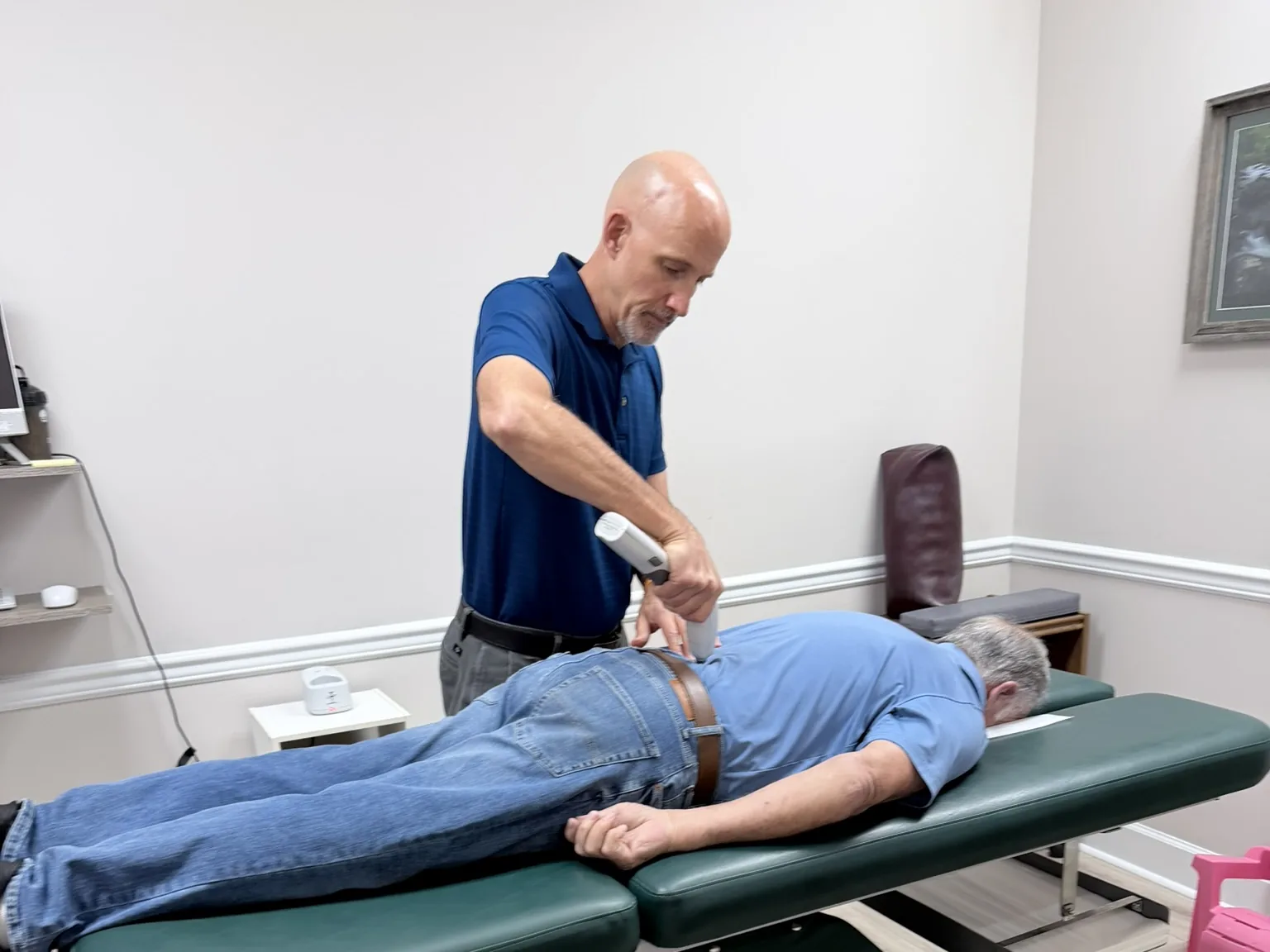
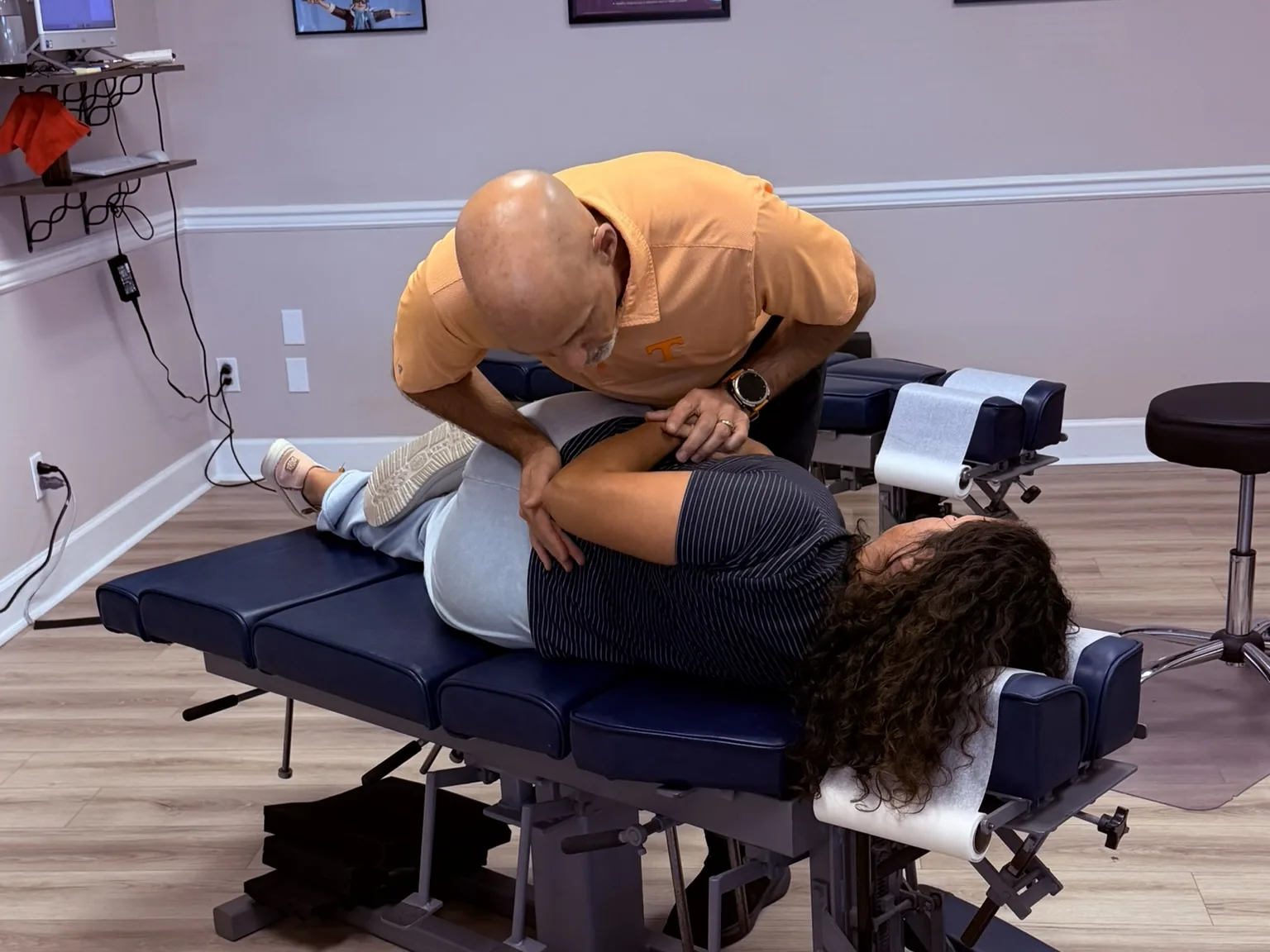
When your evaluation points to a neck-related pattern, care focuses gently and specifically on restoring normal motion to the upper cervical spine and easing the muscle tension that disrupts your sense of balance. With the Activator Method, Dr. Scott can use precise, low-force adjustments delivered with a handheld instrument — a comfortable, controlled option that many patients prefer for the neck, with no twisting. He’s also trained in Diversified, Gonstead, Palmer, and Drop Table techniques, and he matches the approach to your comfort and findings. Care often includes posture correction and simple home exercises to support steadier, more reliable signaling from the neck. Throughout, he tracks your progress and stays honest with you: if you’re not responding as expected, he reassesses and adjusts the plan or refers onward.

Typical care timeline

Screening and relief

Duration: Weeks 1–3
Frequency: 2–3 visits per week

Confirm a cervicogenic pattern, rule out red flags, and begin easing upper-neck restriction and tension.

Corrective phase

Duration: Weeks 3–10
Frequency: 1–2 visits per week

Restore normal upper-cervical motion, improve posture, and reduce the frequency of dizziness episodes.

Maintenance and prevention

Duration: As needed
Frequency: Periodic check-ins

Reinforce posture and home exercises to keep balance-related symptoms from returning.

Frequently asked questions

Can a chiropractor help with vertigo and dizziness?

Sometimes, when the dizziness is cervicogenic — meaning it’s linked to dysfunction in the upper neck. Conservative care that restores neck motion can help in those cases. But many causes of dizziness are not neck-related, so Dr. Scott screens carefully first and refers you for medical evaluation when that’s what your symptoms call for.

How do you know whether my neck is causing it?

Through a careful history and exam. Cervicogenic dizziness typically tracks with neck pain, stiffness, or certain head positions, and it’s diagnosed only after red flags and other causes are screened out. If your picture suggests an inner-ear or neurological source, you’ll be referred appropriately.

Is neck adjustment safe if I'm already dizzy?

Safety comes first. Dr. Scott uses gentle, controlled techniques, including the Activator Method; the Activator delivers a precise, low-force adjustment with no twisting — well suited to careful neck care. He only proceeds when your case is appropriate for conservative treatment.

When should I go to the ER instead?

Immediately, if dizziness comes with sudden severe headache, slurred speech, facial drooping, vision changes, one-sided weakness or numbness, trouble walking, fainting, or chest pain. Those can signal a stroke or other emergency and need urgent medical care, not chiropractic.

How long until I feel steadier?

It depends on the cause and how long you’ve had symptoms. Some patients with cervicogenic dizziness notice improvement within a few weeks. After your exam, Dr. Scott gives you a realistic timeline and reassesses if you’re not responding as expected.

Written by Dr. Jon Scott, DC — a Knoxville, TN chiropractor with more than 29 years in practice. Learn about Dr. Scott.

Credentials: Doctor of Chiropractic, Cleveland Chiropractic College (1996). Last updated June 26, 2026.

Your solution to pain.

We test, we don't guess. Book your first visit today — new patient special $45.